Repair Versus Replace Rooftop Units Wisely
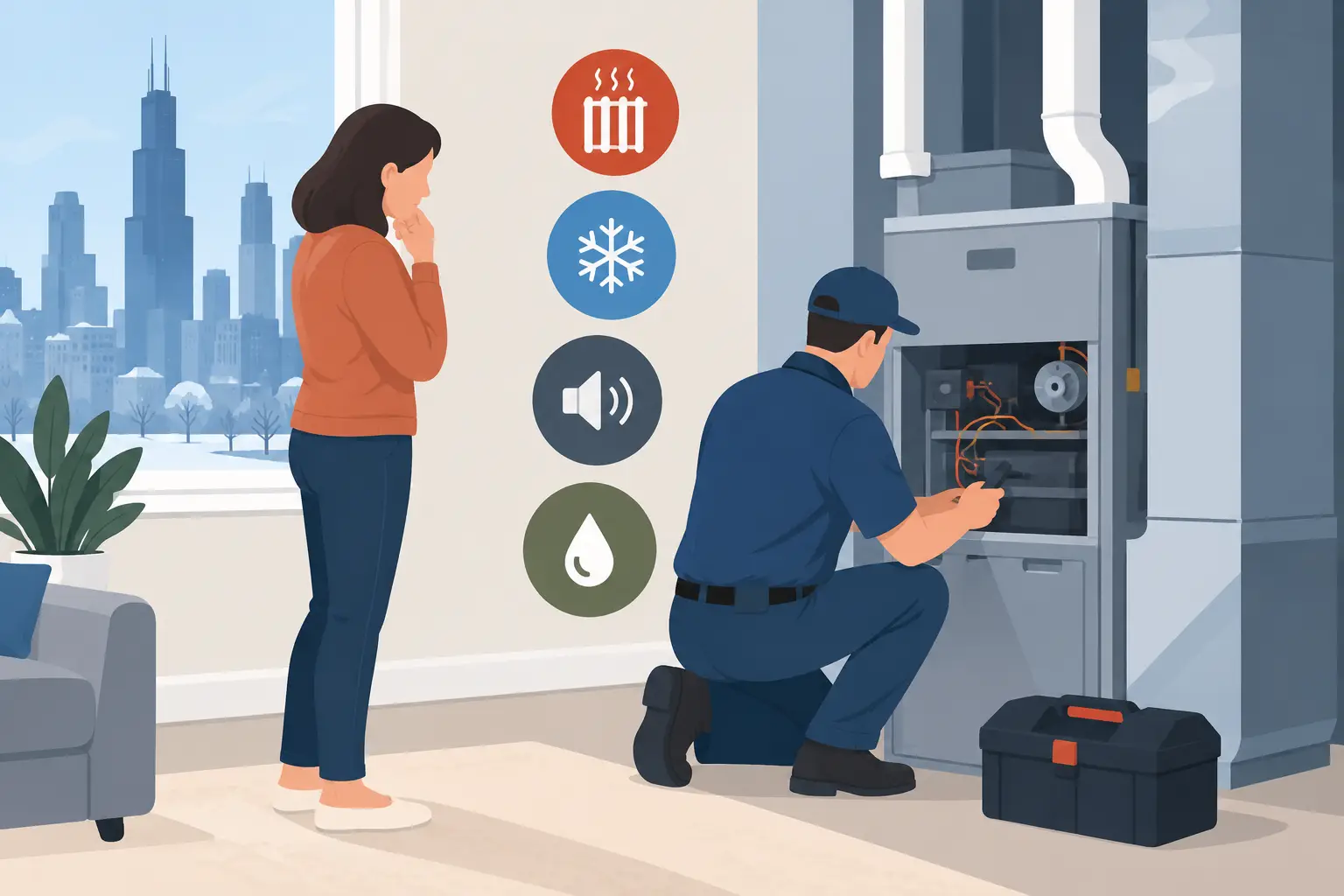
A rooftop unit failing before a busy workday is not just an HVAC problem. It can mean uncomfortable customers, distracted employees, inventory concerns, tenant complaints, and unexpected operating costs. The repair versus replace rooftop units decision should be based on more than whether the system can be started again. The right choice protects your budget now while reducing the chance of another disruptive breakdown when Chicago weather turns extreme.
A qualified technician should inspect the equipment before recommending either path. Some rooftop unit failures are straightforward and cost-effective to repair. Others signal that the system is nearing the end of reliable service. Clear answers about condition, repair scope, expected lifespan, and cost help property owners make a practical decision without guessing.
When Rooftop Unit Repair Makes Sense
Repair is often the right answer when the unit has been maintained, the failure is isolated, and the rest of the equipment is operating efficiently. A failed capacitor, contactor, belt, thermostat control, blower motor, pressure switch, or electrical connection may be repairable without replacing the entire unit.
Age matters, but it is not the only factor. A well-maintained 8-year-old rooftop unit with a single failed component may have many productive years left. In that case, a professional repair can restore dependable heating or cooling at a fraction of replacement cost.
Repair may also be the sensible short-term option when a property has a planned renovation, lease transition, or upcoming equipment upgrade budget. The key is to be honest about what the repair accomplishes. A good repair should address the cause of the problem, not merely keep the unit running for a few more days.
Signs a Repair Is Likely Worth It
A repair is generally easier to justify when the unit is under 10 years old, uses an available refrigerant, has no major cabinet or heat exchanger damage, and has not needed frequent service. Stable utility bills and consistent airflow are also positive signs.
For commercial properties, consider the unit’s role in the building. If one rooftop unit serves a small office zone and a backup system can handle temporary demand, repair risk may be manageable. If it serves a restaurant dining room, medical office, server space, or high-traffic retail area, reliability deserves more weight than the lowest immediate invoice.
When Replacement Is the Better Investment
Replacement becomes more practical when repair costs keep returning, performance is declining, or the equipment has reached the later part of its expected service life. Many packaged rooftop units can operate for 15 to 20 years with strong maintenance, but Chicago winters, summer humidity, rooftop exposure, and deferred service can shorten that timeline.
An older unit may still run, yet cost more every month through inefficient operation. Dirty coils, worn compressors, aging motors, deteriorated insulation, and control issues can force the equipment to work harder than it should. Those inefficiencies show up as uneven comfort, longer run times, and rising utility bills.
Major failures change the calculation quickly. A compressor replacement, extensive refrigerant leak repair, damaged heat exchanger, failed control board combined with other wear, or serious corrosion can make investing in an aging unit difficult to defend. The repair may be possible, but possible is not always cost-effective.
Watch for Repeat Breakdowns
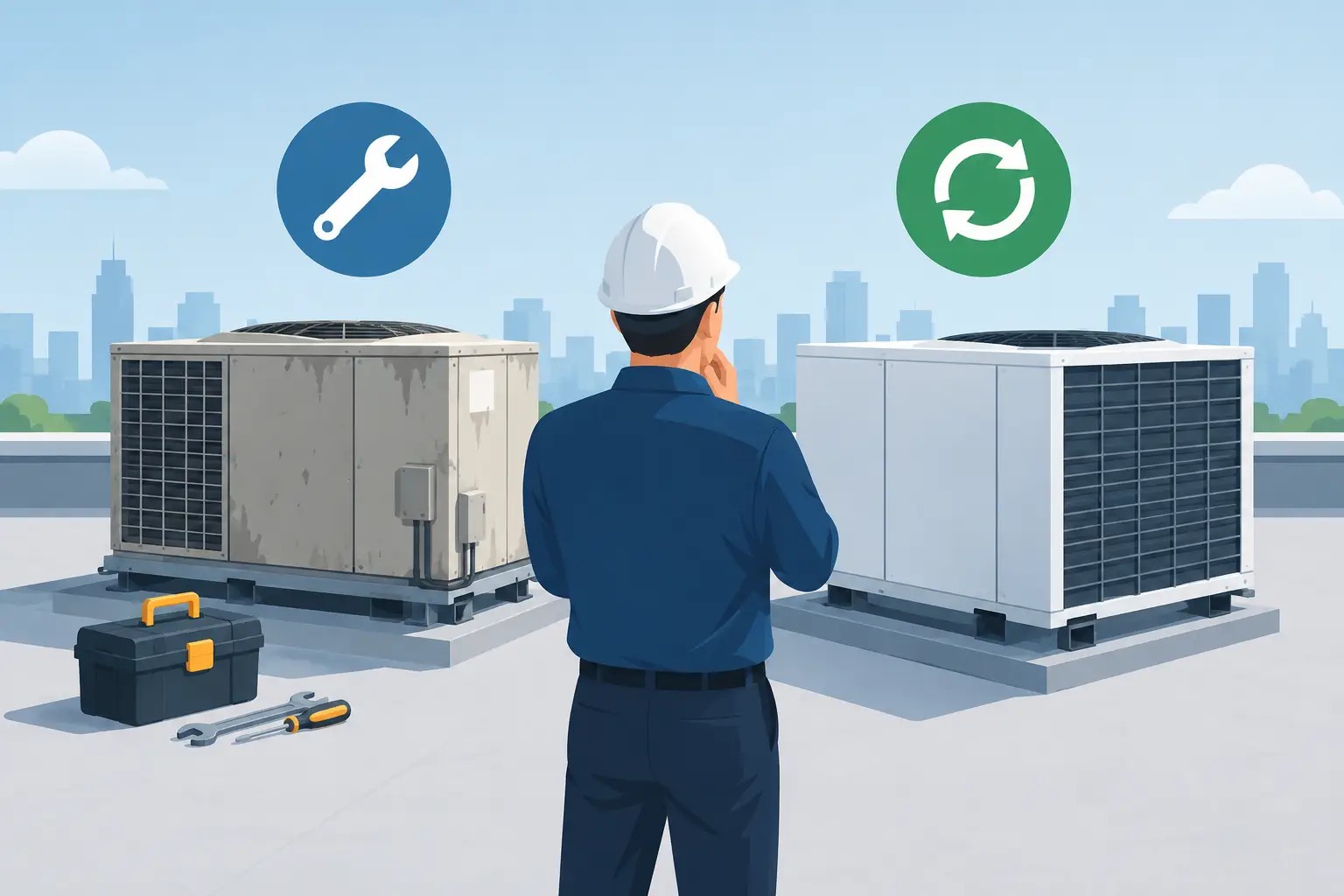
The most useful question is not, “Can it be repaired?” Almost every component can be repaired or replaced. The better question is, “What will this repair buy us?” If the answer is only a few months of uncertain operation before another likely failure, replacement may provide better value.
Look at the previous 12 to 24 months of service history. Multiple calls for different problems often indicate broad system wear. If repair spending is approaching a meaningful portion of replacement cost, a new unit deserves serious consideration. There is no single percentage that fits every property, but spending heavily on a unit near the end of its life can turn into a cycle of emergency calls and lost productivity.
Compare the Full Cost, Not Just Today’s Price
A repair quote is usually lower than a replacement proposal, which makes repair feel like the easy decision. But the lower initial cost does not always mean lower ownership cost. Property managers and business owners should compare both immediate and long-term expenses.
A replacement project includes equipment, crane coordination when needed, installation labor, electrical or curb modifications, permits where required, startup, and commissioning. That is a larger investment. In return, a properly sized and installed rooftop unit can provide improved efficiency, stronger comfort control, warranty protection, and fewer unplanned service calls.
Repair costs should include more than the part being replaced. Consider production interruptions, after-hours emergency service, tenant inconvenience, lost customer traffic, and the likelihood of another repair. A failing unit that needs urgent attention during a heat wave or deep freeze can cost much more than its invoice.
Efficiency Can Shift the Math
Newer rooftop systems are often more efficient than older equipment, especially if the existing unit was installed many years ago or has been operating with worn components. Better efficiency does not guarantee an immediate payback for every building. Usage hours, utility rates, building insulation, thermostat settings, and system sizing all affect results.
Still, efficiency should be part of the decision. A unit that runs long cycles, struggles to hold setpoint, or creates hot and cold zones may be wasting energy even when no obvious part has failed. Replacement is also an opportunity to correct sizing problems that have affected comfort for years.
Refrigerant, Safety, and Parts Availability Matter
Some older rooftop units use refrigerants that are expensive or increasingly difficult to obtain. A significant leak in one of these systems may push replacement higher on the list, particularly if the equipment is already old or has a history of refrigerant problems. Adding refrigerant without finding and repairing the leak is not a dependable long-term solution.
Heating safety is equally important. Cracked heat exchangers, combustion problems, venting concerns, or carbon monoxide risks require immediate professional attention. In these situations, keeping an aging unit in service may not be an appropriate option. Protecting occupants comes first.
Parts availability can also decide the issue. If a critical component is obsolete, backordered for an extended period, or no longer supported by the manufacturer, a repair may leave the building without reliable heating or cooling. A replacement plan can offer a more predictable timeline than waiting for uncertain parts.
Get an Evaluation Before You Commit
A dependable recommendation starts with a complete inspection, not a quick guess from the ground. A technician should evaluate electrical components, refrigerant performance, airflow, compressors, heat sections, belts, coils, drain systems, controls, and overall cabinet condition. They should also ask about comfort complaints, operating hours, previous repairs, and plans for the property.
Ask for the reason behind the recommendation in plain language. If repair is advised, understand what component failed, why it failed, and what other concerns were found. If replacement is advised, request an explanation of the unit’s condition, efficiency opportunity, expected installation scope, and how the proposed equipment fits the building’s needs.
For customers in Chicago’s 60641, 60625, and 60630 areas, 4J’s Heating and Cooling can assess rooftop unit problems with certified technicians and provide a clear, practical path forward. Fast service matters when comfort or operations are at risk, but a rushed decision should still be an informed one.
Prevent the Next Emergency Decision
The best repair-versus-replace decision is one made before the unit fails completely. Seasonal maintenance gives technicians a chance to identify weak capacitors, worn belts, dirty coils, blocked drains, loose electrical connections, and declining heating performance before they become urgent problems.
Maintenance also creates a service history. That record helps owners budget for replacement at the right time instead of being forced into an emergency installation during the hottest or coldest week of the year. Planned replacement gives you more control over equipment selection, scheduling, and business disruption.
If your rooftop unit is making unusual noise, tripping breakers, leaking, short cycling, producing uneven temperatures, or needing repeated service, schedule an evaluation before the next weather swing makes the choice for you. A clear diagnosis today can protect comfort, operations, and your budget tomorrow.