
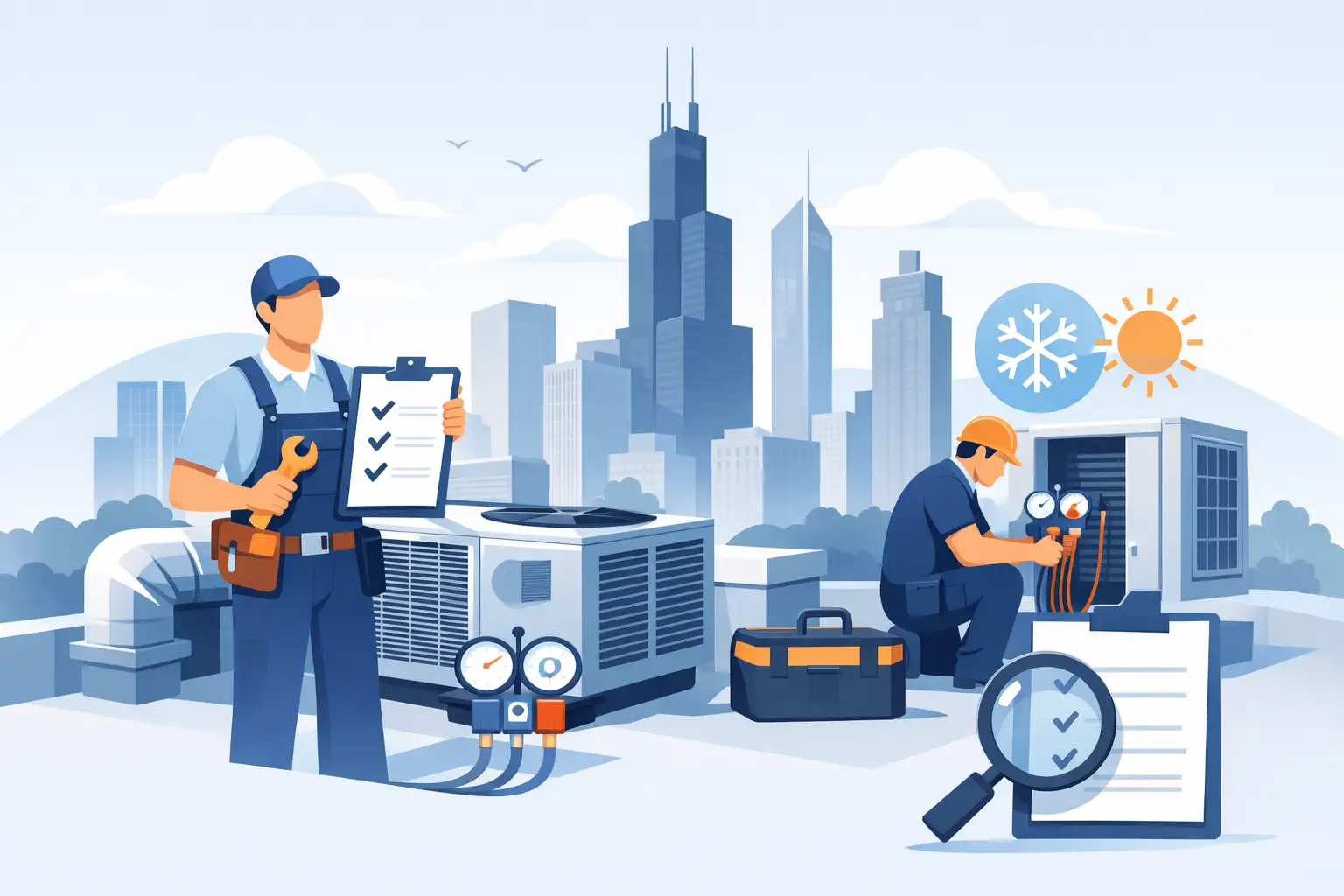
Commercial HVAC Maintenance Checklist for Chicago
A rooftop unit that fails during a packed lunch rush, a boiler that stops heating tenant spaces, or an air conditioner that cannot keep up with a Chicago heat wave can disrupt far more than comfort. A consistent commercial HVAC maintenance checklist gives business owners and property managers a practical way to catch small problems before they become expensive emergencies.
Planned maintenance does not eliminate every repair. Equipment can still fail unexpectedly, especially during periods of extreme heat or cold. But regular inspections, cleaning, and performance checks reduce avoidable breakdowns, support lower utility costs, and help your heating and cooling equipment last longer.
Why Commercial HVAC Maintenance Matters
Commercial HVAC systems work harder than most residential equipment. They may run long hours, serve multiple zones, handle fluctuating occupancy, and operate through Chicago winters and humid summer days. A minor airflow issue or clogged filter can quickly turn into uneven temperatures, high energy use, tenant complaints, or a system shutdown.
Maintenance also protects your budget. When coils are dirty, belts are worn, or controls are out of calibration, equipment must work harder to produce the same result. That extra strain increases operating costs and can wear out major components sooner.
For landlords and facility managers, maintenance is also a service issue. Reliable heating and cooling supports employees, customers, tenants, inventory, and daily operations. The right plan documents system condition, identifies repair priorities, and helps you make replacement decisions before failure forces the timing.
Commercial HVAC Maintenance Checklist: Monthly Tasks
Some items can be monitored by an on-site manager or maintenance team. Others require a qualified HVAC technician. The goal is not to have untrained staff open electrical panels or attempt repairs. It is to notice changes early and schedule professional service before the system is under pressure.
Check filters and airflow
Inspect air filters monthly, or more often in buildings with heavy foot traffic, construction dust, kitchens, pets, or high occupancy. Replace filters that are loaded with dirt or follow the manufacturer’s replacement schedule. A restricted filter reduces airflow, makes the blower work harder, and can cause coil icing or overheating.
Walk through occupied spaces while the system is operating. Note hot and cold areas, weak airflow, unusual humidity, and rooms where occupants regularly adjust thermostats. These patterns can point to blocked vents, damper issues, thermostat problems, duct leakage, or equipment that is no longer sized correctly for the space.
Listen and look for warning signs
During a basic monthly check, listen for rattling, grinding, squealing, or banging near HVAC equipment. Look for water around indoor units, drain pans, boilers, or rooftop-unit access areas. Check for unusual odors, frequent cycling, error messages, and thermostats that do not hold the selected temperature.
Small signs matter. Water near an air handler may be a clogged condensate drain. A new squeal can mean a belt is wearing down. Calling for service at this stage is usually simpler and less costly than waiting for equipment to stop.
Keep equipment areas clear
Maintain clear access around furnaces, boilers, air handlers, condensers, and rooftop units. Do not store boxes, cleaning supplies, or inventory against equipment. Outdoor condensers and rooftop units need open airflow, while indoor equipment needs safe access for inspections and repairs.
Remove leaves, litter, and loose debris from around outdoor equipment when it is safe to do so. Do not use sharp tools or pressure washers on coils. Bent fins and damaged coil surfaces can reduce performance and create a larger repair issue.
Seasonal Maintenance Tasks for a Licensed Technician
A professional tune-up should happen before the heavy cooling season and again before heating season. The exact scope depends on your system. A small retail space with a split system has different needs than a multi-tenant building with boilers, makeup air units, rooftop units, or building automation controls.
Before cooling season
Cooling maintenance should focus on efficiency, electrical reliability, drainage, and airflow. A certified technician should inspect and clean condenser and evaporator coils as needed, test capacitors and contactors, check refrigerant performance, inspect wiring, tighten electrical connections, and verify blower operation.
The technician should also clear and test condensate drains, inspect drain pans, check thermostat accuracy, and confirm that supply and return temperatures are within an expected range. Refrigerant should never be treated as a routine top-off item. If levels are low, the system may have a leak that requires proper diagnosis and repair.
For rooftop equipment, service should include a careful inspection of cabinet panels, seals, fan assemblies, belts, economizers, and outdoor air components. Chicago wind, snow, debris, and changing temperatures can take a toll on exposed equipment.
Before heating season
Heating maintenance is especially important before cold weather arrives. For gas furnaces and unit heaters, technicians should inspect burners, ignition components, heat exchangers, gas connections, venting, flame-sensing parts, safety switches, and carbon monoxide risks. A cracked heat exchanger or venting problem is not a comfort issue alone. It can be a safety concern that needs immediate attention.
Boiler maintenance may include checking water levels, pressure controls, pumps, valves, expansion tanks, relief valves, combustion performance, and piping for leaks or corrosion. Steam and hydronic systems need a different service approach, so the maintenance plan should match the equipment actually serving your building.
A technician should also test thermostats, zone controls, and emergency shutdown functions. If some areas of the building are too warm while others are cold, the problem may be control-related rather than a complete equipment failure.
Quarterly and Annual Building Checks
Quarterly reviews help turn maintenance from a reaction into a plan. Review utility bills for unexplained increases, compare comfort complaints by area, and track every repair call. Repeated issues with the same unit can show whether repair remains the sensible option or replacement planning should begin.
At least once a year, have your HVAC contractor review the system’s overall condition. This review should cover equipment age, repair history, expected service life, available parts, efficiency concerns, and risks to business operations. There is a trade-off here: replacing equipment early requires capital investment, but continuing to repair an aging unit can cost more in energy, downtime, and emergency service.
It is also smart to confirm that equipment labels, shutoff locations, thermostat zones, and maintenance records are current. When an urgent problem occurs, clear records help technicians diagnose the issue faster and help property teams communicate accurately with occupants.
What Your Maintenance Log Should Include
A maintenance log does not need to be complicated. It should record the service date, equipment serviced, technician findings, repairs completed, filters changed, parts recommended, and the next scheduled visit. Include notes about recurring comfort complaints and any temporary fixes.
For multi-unit properties, identify equipment by location, such as “rear office rooftop unit” or “third-floor boiler zone.” This simple detail prevents confusion during after-hours calls and makes it easier to see patterns over time.
When to Call for Commercial HVAC Service Right Away
Do not wait for the next maintenance visit if your system produces burning smells, shuts down repeatedly, leaks water, makes loud mechanical noise, trips breakers, or fails to heat or cool occupied areas. The same applies to suspected gas odors, carbon monoxide concerns, or a boiler pressure issue. Shut down equipment when it is safe to do so and request professional help immediately.
4J’s Heating and Cooling helps commercial customers address urgent HVAC problems and build maintenance plans that fit their building, equipment, and operating schedule. Fast service matters when comfort affects tenants, employees, and customers.
The best time to schedule maintenance is before the first extreme-weather day exposes a problem. A clean filter, a verified safety control, and a technician’s early recommendation can protect a full workday, a lease relationship, or a busy weekend of business.