
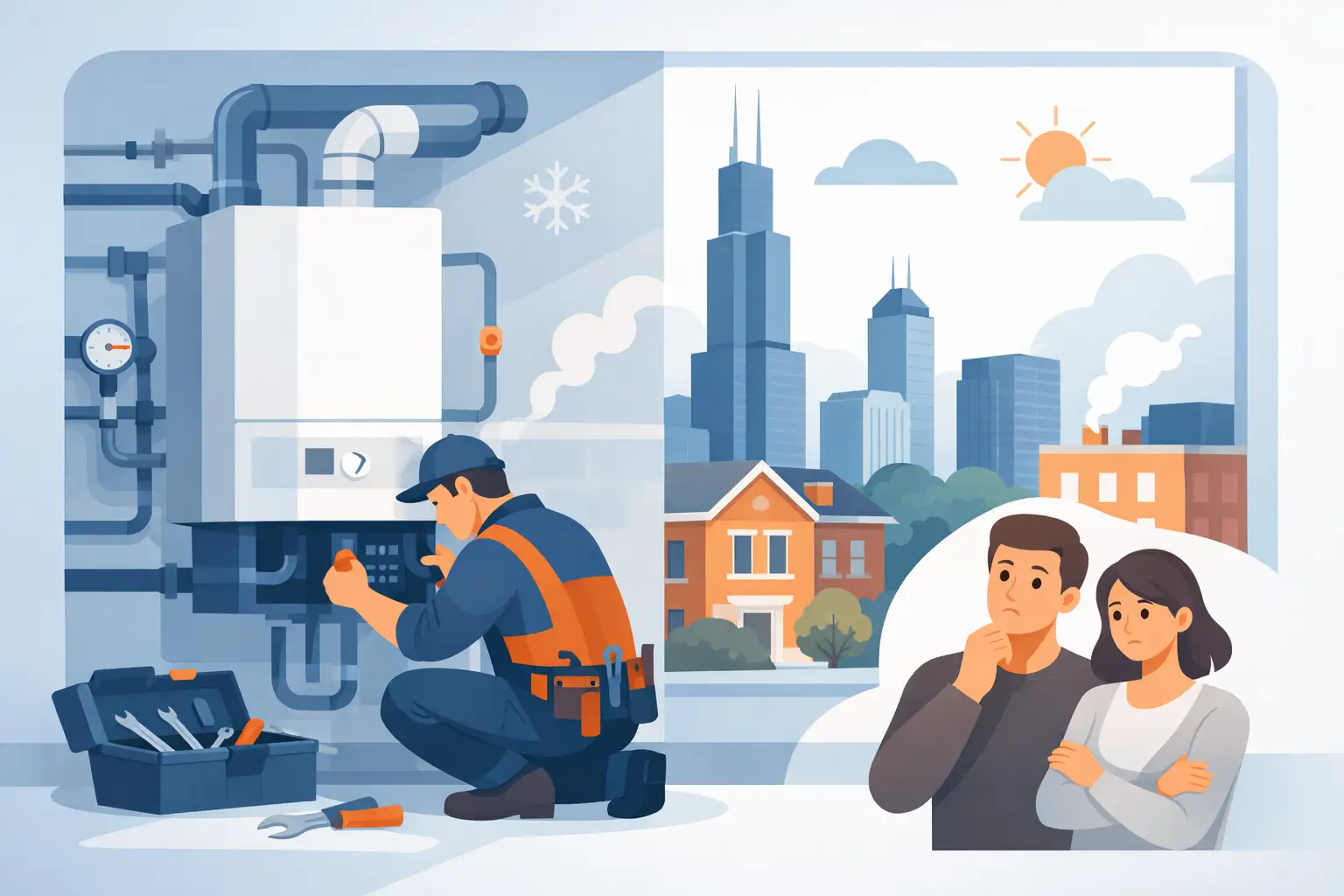
Boiler Repair: When Chicago Properties Need Help
A boiler that stops working is more than an inconvenience when Chicago temperatures drop. No heat, weak radiators, strange noises, or a water leak can quickly affect your family, tenants, customers, and property. Fast boiler repair helps restore dependable comfort before a small equipment issue becomes a bigger interruption or a costly water-damage problem.
For homeowners, landlords, and commercial property managers, the right response is simple: take warning signs seriously, protect the space safely, and get a qualified technician involved before the system fails completely. Boilers are dependable equipment when maintained properly, but they are not systems to troubleshoot aggressively with DIY repairs, especially when gas, pressure, electrical components, or leaking water are involved.
What to Do When Your Boiler Stops Heating
Start by checking the basics without taking panels apart or adjusting unfamiliar controls. Confirm that the thermostat is set to heat and set above the current room temperature. Check whether the boiler has power and whether a circuit breaker has tripped. If your system has a visible pressure gauge, note the reading, but do not try to correct pressure unless you have been shown how to do so safely by a heating professional.
If you smell gas, hear a strong hissing sound near a gas line, see heavy leaking, or notice a carbon monoxide alarm, leave the area and follow emergency safety procedures immediately. Do not operate switches, light matches, or attempt to restart the boiler. These conditions require urgent professional attention.
When there is no immediate hazard, turn the thermostat down if the boiler is making alarming noises or leaking. Move valuables away from any water, place a container under a small accessible drip if it is safe to do so, and call for service. A clear description of what changed – no heat, no hot water, a flashing error code, a banging sound, or a leak – helps a technician arrive prepared.
Boiler Repair Warning Signs You Should Not Ignore
Boilers often give notice before they quit. Catching those signs early can mean a focused repair instead of an emergency call during the coldest night of the season.
Uneven Heat or Cold Rooms
If some radiators heat while others stay cold, the problem may involve trapped air, circulation, zone controls, a failing pump, or a thermostat issue. The cause depends on the boiler type and heating layout. A single cold room may be a localized issue, while inconsistent heat across the building can point to a system-wide problem.
New Sounds From the Boiler or Radiators
Banging, whistling, rumbling, gurgling, or repeated clicking are not normal background noise. Mineral buildup, air in the system, low water pressure, circulation trouble, or ignition issues can all create unusual sounds. The longer the system runs under strain, the more likely other components are affected.
Water Around the Unit
A small leak can come from a valve, pipe connection, pump seal, pressure-relief component, or internal boiler part. It is tempting to ignore a slow drip, especially if heat is still working. That is a gamble. Water can damage flooring, corrode components, reduce system pressure, and turn a repairable issue into a larger failure.
Rising Utility Bills Without a Clear Reason
A boiler that runs longer to deliver the same comfort is wasting fuel. Dirty components, poor combustion, control problems, mineral scale, circulation issues, or an aging system can all reduce efficiency. Higher bills do not automatically mean replacement is needed, but they do justify a professional assessment.
Frequent Resets or Error Codes
One reset after a brief power interruption may not be unusual. Repeated shutdowns, lockouts, or error messages are different. The boiler is signaling that a safety control or operating condition needs attention. Continually resetting it can hide the real problem and may leave you without heat when you need it most.
Why Delaying a Boiler Problem Costs More
Heating problems rarely improve on their own. A worn circulator pump can eventually stop moving hot water. A minor leak can lower pressure and damage nearby materials. A combustion or venting issue can affect safe operation. Even when the boiler still produces heat, reduced efficiency can quietly add to monthly energy costs.
For landlords and property managers, delay can also mean tenant complaints, frozen-pipe risk, and disrupted operations. For businesses, an uncomfortable building affects employees and customers. Prompt service protects more than the equipment. It protects the people who depend on the space every day.
There is a trade-off, of course. Not every unusual sound requires a middle-of-the-night emergency visit, and not every older boiler needs immediate replacement. But loss of heat during cold weather, active leaks, recurring shutdowns, gas odors, or safety concerns should move to the top of the list.
What Professional Boiler Repair Should Include
A dependable repair begins with diagnosis, not guesswork. A technician should listen to the symptoms, inspect the boiler and related controls, check system pressure and circulation, and identify the actual source of the problem. Depending on the equipment, that may include inspecting ignition components, pumps, valves, expansion tanks, venting, thermostats, and radiator or zone performance.
The best service call also includes a plain explanation. You should know what failed, why it likely failed, what repair is recommended, and whether there are signs of another part nearing the end of its service life. Clear communication helps you make a practical decision instead of approving a repair you do not understand.
At 4J’s Heating and Cooling, the goal is to restore heat efficiently and address the cause of the breakdown, not simply get the boiler running for a few more hours. That matters when your home, rental property, or business depends on reliable heat through a Chicago winter.
Boiler Repair or Replacement: How to Decide
Repair is often the right choice when the boiler is in otherwise good condition, the issue is isolated, replacement parts are available, and repair costs are reasonable compared with the unit’s remaining life. A failed thermostat, circulator, valve, ignition component, or pressure-related part does not automatically justify replacing the entire system.
Replacement deserves serious consideration when repairs are frequent, parts are obsolete, the heat exchanger is compromised, efficiency is poor, or the boiler is near the end of its expected service life. An older unit can sometimes be repaired, but repeated service calls and high fuel use may make a new system the better long-term value.
The answer depends on the equipment, the building, and your budget. A homeowner may prioritize lower upfront cost. A commercial property manager may place more value on reliability, warranty coverage, operating costs, and avoiding downtime. A qualified technician can explain both paths without pressuring you into a decision that does not fit the property.
Prevent the Next Heating Emergency
Routine maintenance gives a boiler the best chance to operate safely and efficiently. Before the heating season, have the system inspected and serviced. Maintenance can identify worn parts, pressure concerns, venting issues, control problems, and efficiency losses before they become a no-heat call.
Keep the area around the boiler clear and avoid storing boxes, chemicals, or flammable materials nearby. Pay attention to changes in radiator performance, boiler sounds, or utility costs. If your property has several heating zones or a larger commercial system, keep a record of service dates and recurring issues. Those details make future diagnosis faster and more accurate.
When your boiler shows signs of trouble, acting early is the most practical way to protect comfort, control costs, and avoid a stressful breakdown. Reliable heat starts with a system that gets the attention it needs before a minor warning becomes an urgent problem.