How to Test Carbon Monoxide Detectors Safely
A carbon monoxide alarm can look perfectly normal while its battery is weak, its sensor has expired, or its placement leaves part of the property unprotected. That is why homeowners, landlords, and business operators should test carbon monoxide detectors regularly, especially before Chicago’s heating season puts furnaces, boilers, fireplaces, and other fuel-burning equipment back to work.
Carbon monoxide is colorless and odorless. You cannot rely on smell, smoke, or visible fumes to warn you. A working detector gives you an early warning so everyone inside has time to get out and call for help. The test takes less than a minute, but it must be done correctly.
How to Test Carbon Monoxide Detectors
Start by telling everyone in the home or building that you are testing the alarm. This avoids unnecessary concern when the alarm sounds. If the unit is connected to a monitored security system, follow the monitoring company’s procedure before testing.
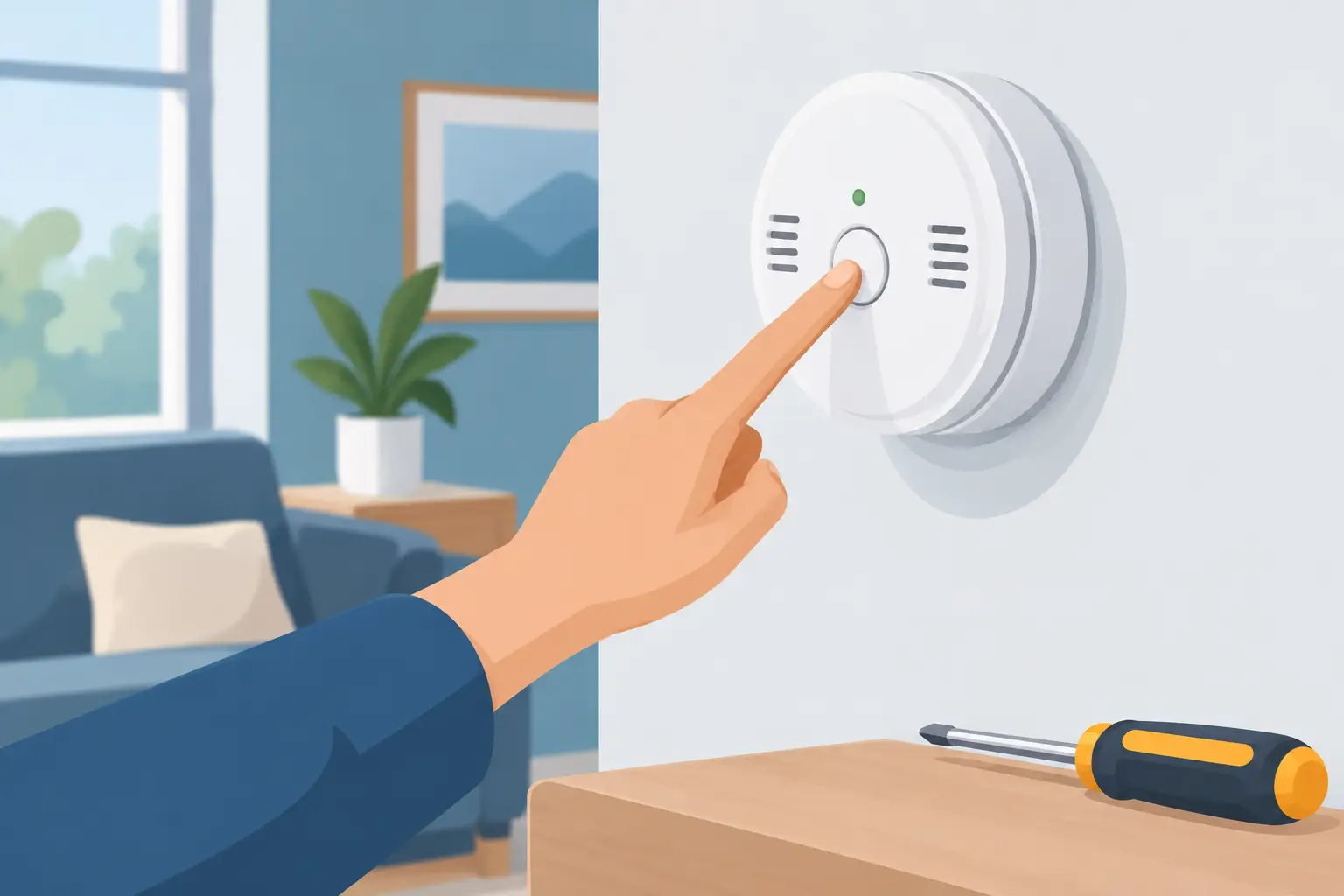
Press and hold the test button on the detector until the alarm sounds. Depending on the model, you may hear a loud repeating pattern, see lights flash, or receive a message through a connected app. A clear, strong alarm means the button, power supply, and audible alert are responding.
Test every carbon monoxide alarm at least once a month. If you have interconnected alarms, confirm that each connected unit responds as it should. In a larger property, make a simple record of the date, location, and result. This is especially useful for landlords, property managers, and commercial facilities with multiple units or floors.
A passing button test does not prove the carbon monoxide sensor can accurately detect CO. It confirms that the alarm’s basic electrical functions are working. Check the manufacturer’s instructions for your exact model to see whether it recommends a sensor test using an approved test product. Never attempt to test an alarm with vehicle exhaust, a grill, a lighter, burning paper, or any improvised source of fumes. Those methods can create a real hazard and may damage the detector.
Do not ignore a weak or silent test
If the sound is faint, inconsistent, or absent, replace the battery if your model uses one and test again. Make sure the battery is installed in the correct direction and that the battery drawer is fully closed. Hardwired units usually have a backup battery, and that backup needs attention too.
If the detector still fails, replace it promptly. Do not assume another detector elsewhere in the building will provide enough protection. One failed unit can leave a bedroom, basement, utility area, or occupied work space without adequate warning.
Check the Date on Every Alarm
Carbon monoxide detectors do not last forever. Most models need replacement after five to 10 years, depending on the manufacturer and technology. Look for a manufacture date, replacement date, or end-of-life label on the back or side of the unit. Some alarms also chirp or display a message when they have reached the end of their service life.
Replacing the battery will not fix an expired sensor. This is a common and costly misunderstanding. If the alarm has reached its replacement date, install a new unit even if the test button still makes noise.
Set a recurring calendar reminder to test alarms monthly and inspect their dates twice a year. Many property owners pair this with changing HVAC filters, checking thermostat settings, or scheduling furnace maintenance. A routine makes the job easier to remember when life gets busy.
Where Carbon Monoxide Detectors Belong
Correct placement matters as much as a working battery. Follow local code and the detector manufacturer’s directions, but in most homes, alarms should be installed on every level, outside sleeping areas, and near attached garages or fuel-burning appliances. If your home has bedrooms on separate floors, each sleeping area needs protection.
Avoid putting detectors directly beside furnaces, water heaters, stoves, fireplaces, or in humid bathrooms. Steam, heat, cooking activity, and normal appliance startup can lead to nuisance alerts or reduce performance. At the same time, do not place an alarm so far away from a mechanical room that a problem may go undetected for too long.
For commercial properties, placement should account for staff work areas, equipment rooms, tenant spaces, sleeping accommodations if any, and attached parking structures. Requirements can vary by property type and local code. When in doubt, ask a qualified HVAC professional or electrician to review the layout rather than guessing.
Keep alarms accessible
A detector hidden behind furniture, high shelving, storage boxes, or decorations may not be heard clearly and can be difficult to test. Keep the area around each alarm open. For ceiling-mounted or high-wall units, use a safe step stool or arrange help instead of stretching from an unstable chair.
If you own rental property, give tenants clear instructions on what the alarm sounds like, how to report chirping, and what to do in an emergency. Tenants should never remove batteries to stop a nuisance chirp. That chirp is a maintenance issue that needs to be addressed right away.
Know the Difference Between a Chirp and an Emergency Alarm
A short chirp every 30 to 60 seconds often indicates a low battery, end-of-life warning, or a unit that needs attention. The exact meaning depends on the model, so check the label or manual. Deal with it promptly rather than waiting for a convenient time.
A full carbon monoxide alarm is different. Treat it as a possible emergency, even if nobody feels sick. Get everyone outside to fresh air immediately, including pets. Call 911 or the fire department from outside, and do not reenter until emergency responders say it is safe.
Carbon monoxide exposure can cause headache, dizziness, nausea, weakness, confusion, chest pain, or flu-like symptoms. Symptoms may become worse indoors and improve outside. Sleeping people, young children, older adults, and people with heart or breathing conditions can be at higher risk, but anyone can be affected.
Do not open a few windows, silence the alarm, and continue using the furnace or appliance. Fresh air may reduce the immediate concentration, but it does not identify or correct the source. A cracked heat exchanger, venting failure, blocked flue, damaged connector, or malfunctioning fuel-burning appliance requires professional inspection and repair.
Reduce the Risk Between Tests
Carbon monoxide safety is closely connected to proper equipment maintenance. Have furnaces, boilers, water heaters, fireplaces, and other fuel-burning systems inspected on schedule. This is particularly valuable before a long Chicago winter, when heating systems run harder and windows remain closed.
Keep vents, flues, and outdoor exhaust terminations clear of snow, leaves, nests, and debris. Never run a vehicle in an attached garage, even with the garage door open. Do not use ovens, grills, generators, or portable fuel-burning equipment to heat indoor spaces. Generators belong outdoors, well away from doors, windows, and air intakes.
If you notice soot, yellow burner flames where blue flames are expected, moisture around vent pipes, unusual odors, frequent headaches indoors, or a furnace that cycles erratically, schedule service. These signs do not automatically mean carbon monoxide is present, but they are good reasons to have the system checked.
A seasonal heating inspection can identify venting and combustion problems before they become an emergency. For homeowners and property managers in the Chicago area, 4J’s Heating and Cooling can inspect heating equipment, explain what the technician finds, and help restore safe, dependable operation.
A Small Test That Protects the People Inside
Testing a detector is simple, but it is not a substitute for maintaining the equipment that can produce carbon monoxide. Use the test button monthly, replace expired alarms on time, and take every full alarm seriously. If an alarm sounds or a fuel-burning system seems unsafe, get outside first. The repair can wait until everyone is protected.