Chicago Emergency HVAC Repair Guide: What to Do
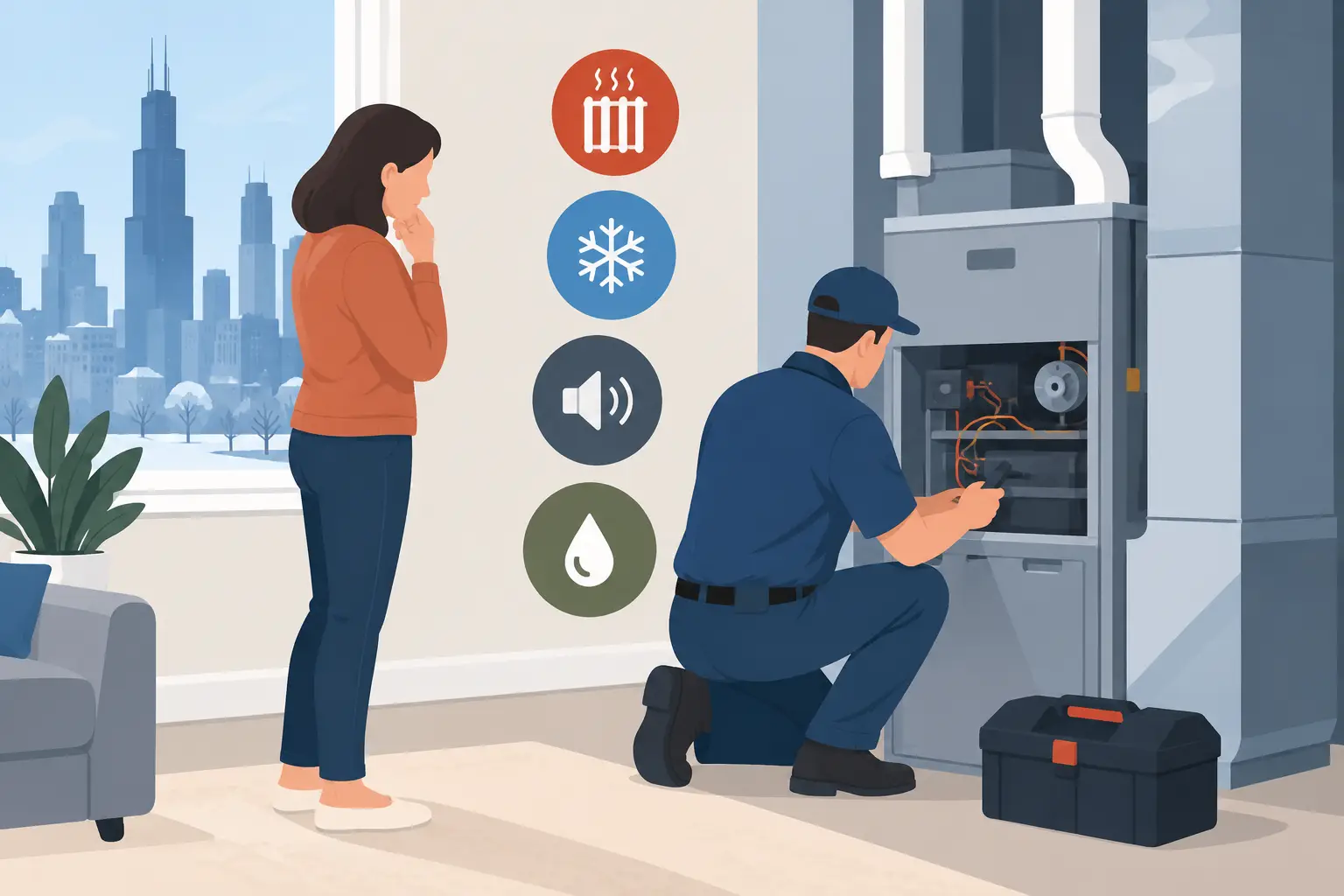
A furnace that quits before sunrise, an AC system blowing warm air during a crowded workday, or a boiler leak spreading across a utility room can turn into a serious problem quickly. This Chicago emergency HVAC repair guide explains what to do first, what not to touch, and when a fast call to a qualified technician is the safest choice.
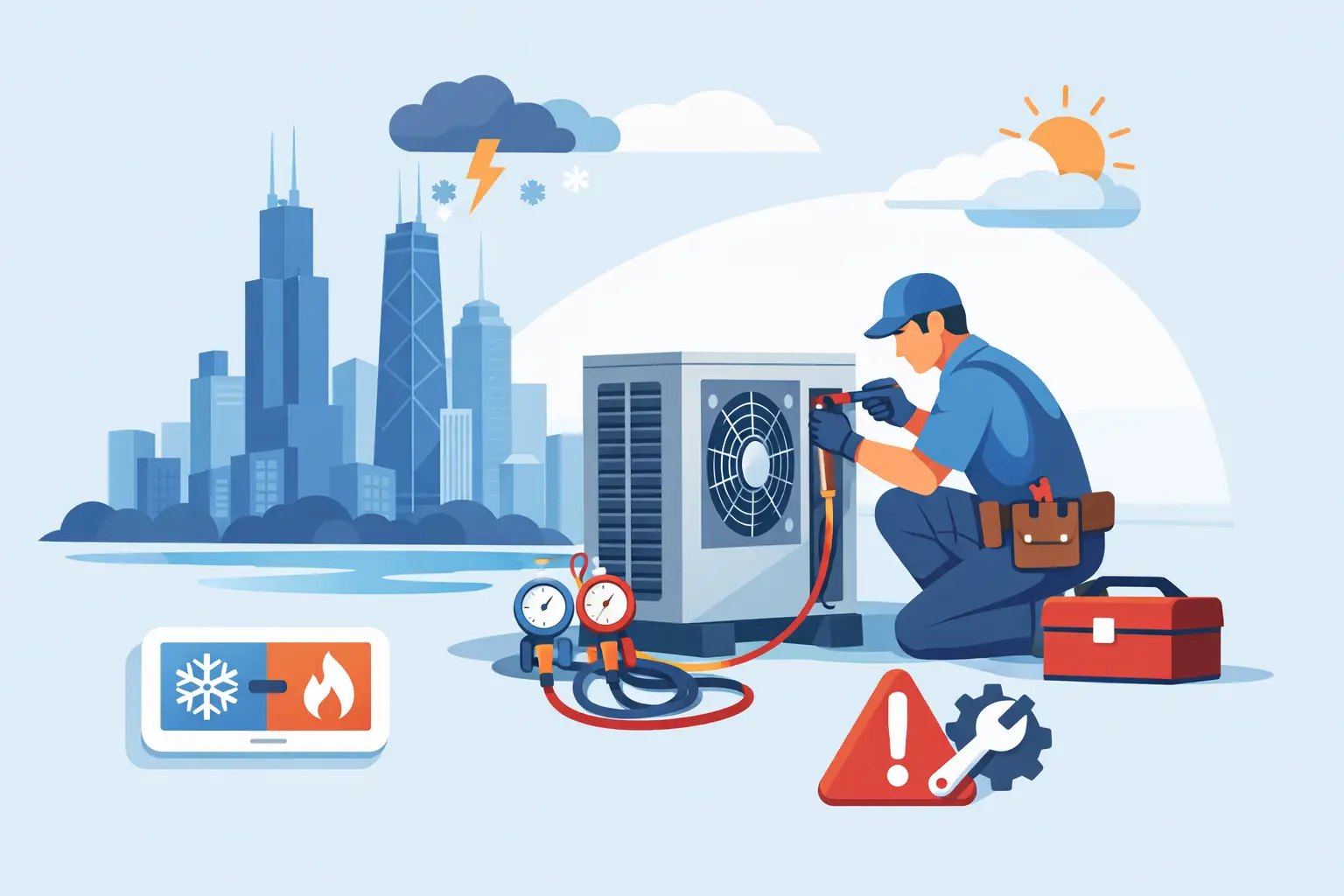
Chicago weather leaves very little room for a heating or cooling system to fail. In winter, a no-heat emergency can put people, plumbing, and property at risk. During hot, humid stretches, a failed air conditioner can make homes uncomfortable and disrupt business operations. Acting calmly and early helps limit damage and gets dependable comfort restored sooner.
What Counts as an HVAC Emergency?
Not every HVAC issue requires an overnight service call. A noisy vent, a room that feels slightly warmer than the rest of the house, or a thermostat that needs a battery can often wait for a regular appointment. An emergency is a problem that creates an immediate safety concern, risks property damage, or makes the building unsafe to occupy.
Loss of heat during freezing weather is one of the clearest examples. Frozen pipes can burst, and indoor temperatures can fall fast in poorly insulated areas, vacant units, or commercial spaces with frequent door traffic. A boiler that is leaking, a furnace that smells like burning electrical wiring, or a system that repeatedly trips a breaker also needs prompt professional attention.
For cooling, the urgency depends on the conditions and who is in the building. A complete AC failure may be an emergency when high indoor temperatures affect older adults, infants, pets, medical needs, or a business that relies on climate control. Water leaking from an air handler or ceiling is urgent because the source may be a blocked drain, frozen coil, or equipment failure that can damage walls, floors, and inventory.
Call for emergency help right away if you notice:
- A gas odor, hissing near a gas line, or suspected carbon monoxide exposure
- Smoke, sparks, a burning smell, or repeated electrical breaker trips
- No heat during freezing conditions
- Significant water leaking from a furnace, boiler, air handler, or ceiling
- A carbon monoxide alarm sounding
- A system failure creating unsafe temperatures for occupants or operations
If you smell gas, leave the building immediately. Do not turn lights, appliances, switches, or thermostats on or off. From a safe location, contact the gas utility and emergency services as appropriate. If a carbon monoxide alarm sounds, get everyone outside, call 911, and do not re-enter until responders say it is safe.
Chicago Emergency HVAC Repair Guide: Safe First Steps
When there is no immediate gas, fire, or carbon monoxide danger, a few safe checks can provide useful information for the technician and may identify a simple issue. The goal is not to repair the system yourself. The goal is to protect the property and avoid making the failure worse.
Start at the thermostat. Confirm it is set to Heat or Cool, not Off, and make sure the temperature setting calls for the system to run. For a furnace, set the thermostat several degrees above the current room temperature. For AC, set it several degrees below. Replace weak batteries if the thermostat screen is blank, but do not remove thermostat wiring or open the wall plate unless you know exactly what you are doing.
Next, check the electrical panel for a tripped HVAC breaker. A breaker that has tripped once can be reset one time. If it trips again, leave it off. Repeated tripping can point to an electrical fault, a failing motor, or another problem that needs professional diagnosis. Resetting it repeatedly can damage equipment and create a safety hazard.
Check the air filter if it is easy to access. A severely clogged filter restricts airflow and can contribute to overheating, frozen AC coils, poor heating, and short cycling. Replace it with the correct size if you have one available. Do not operate a system without a filter, and do not force a filter that does not fit.
If water is collecting around indoor equipment, turn the thermostat off. Then place towels or a shallow pan where it is safe to do so and move valuables away from the area. Do not open a boiler, furnace cabinet, or refrigerant line. A technician needs to determine whether the problem is condensation, a drain blockage, a pump issue, a frozen coil, or something more serious.
For a frozen air conditioner, turn cooling off and set the fan to On if the blower is operating normally. This can help thaw the coil. Do not chip ice off the equipment. Ice often means there is an underlying airflow or refrigerant problem, and restarting the AC too soon can lead to another freeze-up.
What to Tell the HVAC Technician
Clear information helps speed up emergency HVAC repair. Before calling, take note of when the issue started, what the system is doing, and whether anything changed before the failure. For example, mention if the furnace started making a loud humming sound, if the boiler pressure gauge changed, or if the AC stopped after a thunderstorm.
Share the equipment type if you know it: furnace, boiler, central AC, heat pump, rooftop unit, or ductless system. It also helps to describe any error code on the thermostat or equipment display. Photos of visible water, ice, or an error message can be useful, but do not delay a safety call to gather them.
For landlords, property managers, and business operators, provide access details and explain how the issue is affecting occupants or operations. A technician can prioritize the right equipment, likely repair path, and arrival plan when they understand whether the failure affects one apartment, an entire building, a restaurant dining room, or an office floor.
Avoid These Common Emergency Mistakes
Emergency HVAC problems create pressure, and pressure leads people to take risks. The most common mistake is continuing to run equipment that is clearly malfunctioning. A furnace with a burning smell, an AC unit making grinding noises, or a boiler leaking heavily should be shut down if it can be done safely.
Another mistake is treating a recurring problem as a one-time inconvenience. If your furnace works only after several thermostat adjustments, your AC freezes more than once, or a breaker trips every few weeks, the system is warning you that a component may be failing. A temporary restart may restore comfort for a few hours, but it does not address the cause.
Space heaters can help in a limited, supervised way during a heating outage, but they are not a substitute for furnace or boiler repair. Keep them on a stable surface, away from bedding, curtains, furniture, and foot traffic. Plug them directly into a wall outlet, not an extension cord or power strip. Never use an oven or stovetop to heat a home.
Protecting Your Property While You Wait
During a winter no-heat emergency, keep exterior doors and windows closed and concentrate people and pets in a smaller heated area if possible. Open cabinet doors beneath sinks on exterior walls so warmer indoor air can reach plumbing. If temperatures are falling toward freezing, let cold-water faucets run at a small trickle where appropriate to reduce the risk of frozen pipes.
In a commercial property, protect temperature-sensitive inventory and communicate quickly with staff or tenants. If a building has multiple HVAC zones, confirm whether the problem is isolated before assuming the whole system is down. A failed thermostat, blown fuse, or single rooftop unit can affect only part of the property.
For water-related issues, move electronics, documents, and inventory away from the leak. If water is near electrical equipment, do not step into standing water or attempt to unplug anything nearby. Safety comes before cleanup.
Why Fast Professional Repair Matters
Emergency service is about more than getting warm or cool air back. A trained technician can identify whether the immediate failure is the only issue or a symptom of a larger problem. A failed ignitor may be straightforward, while repeated ignition failures may point to a venting, gas, pressure switch, or control-board issue. A clogged AC drain may be simple, while recurring water damage can reveal poor drainage, a frozen coil, or improper system operation.
The right repair also protects efficiency and equipment life. Running a struggling system can strain motors, compressors, heat exchangers, and electrical components. A clear diagnosis lets you make an informed decision between repair, maintenance, or replacement based on the equipment’s age, condition, repair cost, and expected reliability.
4J’s Heating and Cooling provides around-the-clock emergency HVAC support for homes and businesses in Chicago, including the 60641, 60625, and 60630 areas. Certified technicians can assess the problem, explain the repair clearly, and focus on restoring safe, dependable operation without unnecessary guesswork.
When your HVAC system fails, do not wait for a small warning sign to become a larger repair. Put safety first, take only the basic steps you can perform safely, and get professional help when comfort, property, or people are at risk.