10 Boiler Warning Signs You Shouldn’t Ignore
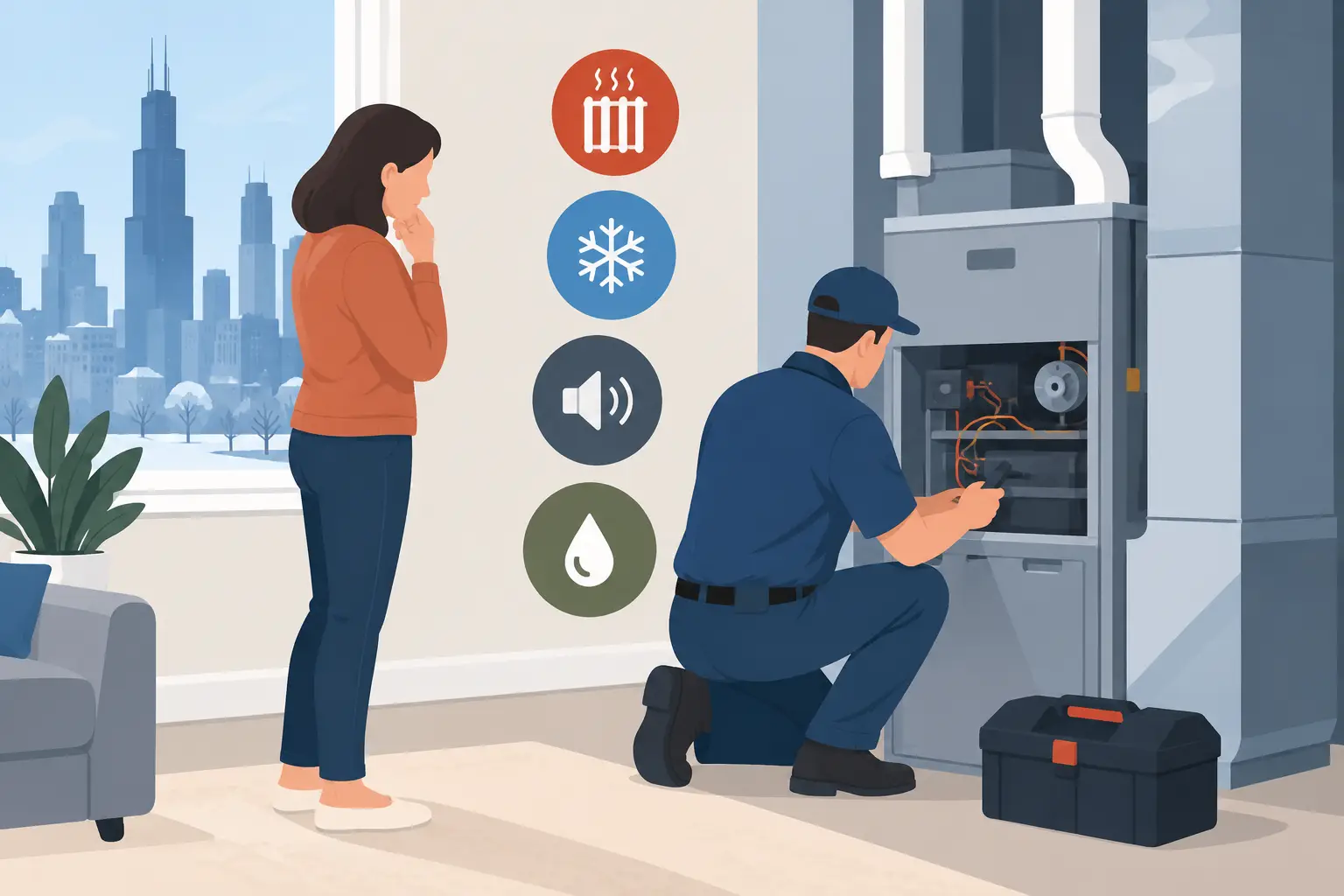
A Chicago boiler rarely quits at a convenient time. It often gives you several boiler warning signs first: a new sound in the basement, rooms that take longer to warm up, or a heating bill that suddenly makes no sense. Acting early can protect your comfort, reduce repair costs, and help prevent a no-heat emergency when the temperature drops.
Boiler Warning Signs That Need Attention
Some changes are minor and may have a simple cause. Others point to a safety concern or a failing component that needs a certified technician. The difference is not always obvious from the outside, which is why it pays to take any change in your boiler’s normal operation seriously.
1. Banging, whistling, or gurgling sounds
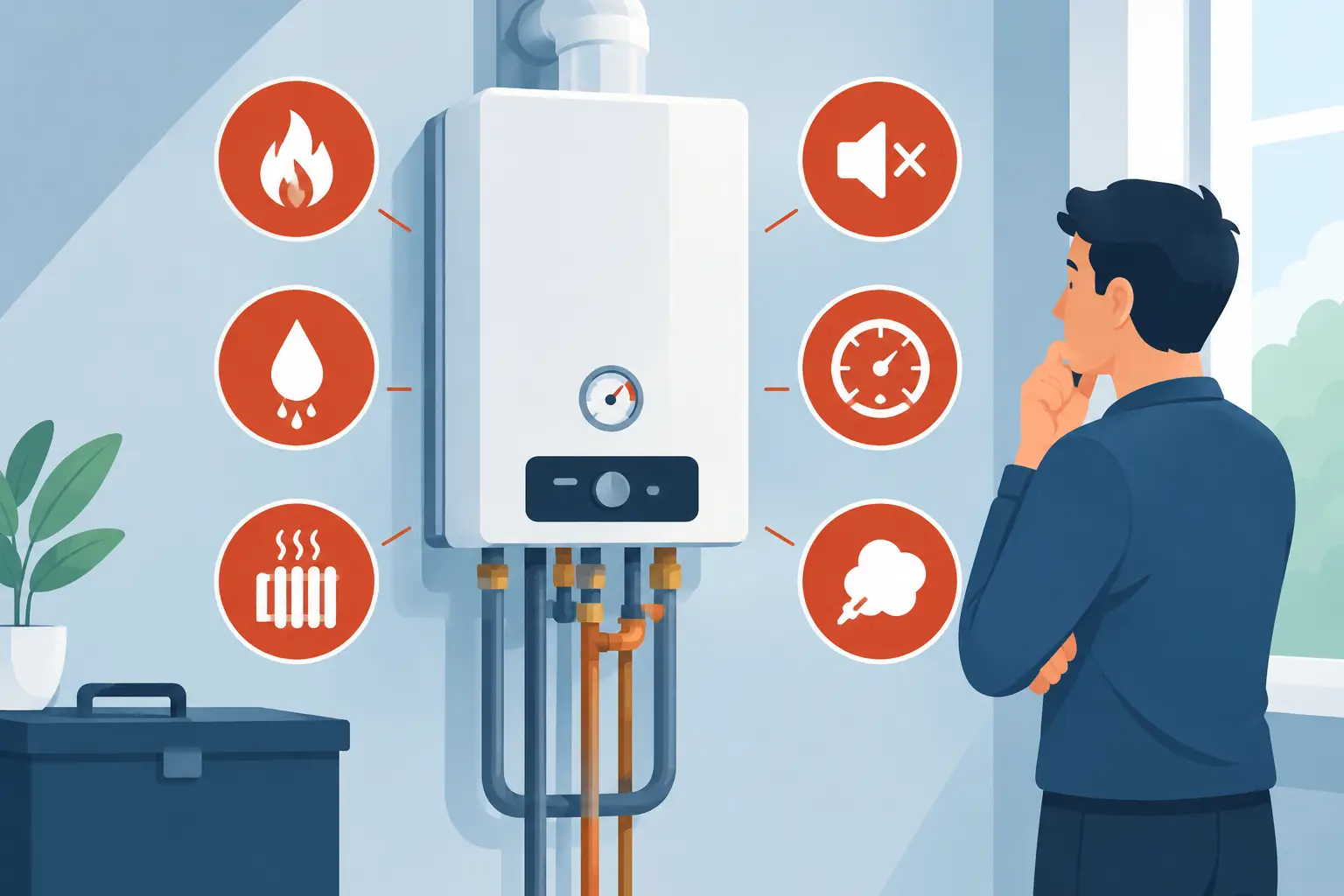
Boilers are not silent, but you should know their usual background sound. Loud banging or rumbling, sometimes called kettling, can happen when mineral buildup restricts water flow through the heat exchanger. Whistling may point to pressure or circulation issues, while gurgling can indicate air trapped in the system.
These sounds do not automatically mean replacement is necessary. In some cases, flushing the system or correcting a circulation issue can restore normal performance. Ignoring the noise, however, can put added strain on major parts and turn a manageable repair into a more expensive one.
2. Uneven heat from room to room
If one part of your home or building feels comfortable while another stays cold, do not assume the boiler is keeping up. Cold radiators, baseboards, or zones can result from trapped air, a failing circulator pump, a stuck valve, low system pressure, or sludge in the lines.
For property managers and business owners, uneven heat can quickly lead to tenant complaints, uncomfortable staff, and disrupted operations. A technician can identify whether the problem is isolated to one zone or connected to the boiler’s overall performance.
3. Water around the boiler
A puddle, drip, or damp spot near the unit should always be checked. Leaks may come from a valve, pump seal, pressure relief component, pipe connection, or the boiler itself. Even a small leak can lead to corrosion, declining pressure, and damage to nearby floors or walls.
Do not keep adding water to a boiler system without finding the reason pressure is dropping. Fresh water can introduce minerals and oxygen that contribute to internal corrosion. Schedule service before the leak grows or the system shuts down.
4. Pressure that is too high or too low
Most boiler systems have a pressure gauge. The appropriate range varies by system, so use the range identified in your owner’s manual or shown by your installer. A gauge that repeatedly falls too low may indicate a leak or expansion tank issue. Pressure that climbs too high can trigger the relief valve and may signal a faulty expansion tank or filling problem.
Avoid adjusting valves or opening the boiler cabinet if you are unsure what you are doing. A trained HVAC technician can diagnose the cause safely and make sure the pressure issue is not damaging the system.
5. Strange odors near the equipment
A dusty smell when heat first starts after a long break can be normal. Persistent burning, metallic, or electrical odors are not. Shut the system off if you can do so safely and arrange a prompt inspection.
If you smell gas, leave the building immediately, avoid switches, phones, flames, and anything that could create a spark. Call your gas utility or emergency services from a safe location. Do not try to locate or repair a gas leak yourself.
6. Yellow or flickering burner flame
For a gas boiler with a visible pilot or burner flame, the flame should generally be steady and blue. A yellow, lazy, or flickering flame can indicate incomplete combustion. This is a serious warning sign because improper combustion can create carbon monoxide.
Every home and commercial property should have working carbon monoxide detectors, especially near sleeping areas and on levels where fuel-burning equipment is used. If a carbon monoxide alarm sounds, get everyone outside and contact emergency services. Do not reenter until the property has been cleared.
7. Rising utility bills without a clear reason
Heating costs naturally move with Chicago weather, fuel rates, building occupancy, and thermostat settings. But a steady rise in energy use despite similar conditions deserves attention. A boiler may be running longer because it has dirty components, poor combustion, circulation problems, heat loss, or aging controls.
Maintenance can often improve efficiency when the equipment is otherwise in good condition. If the boiler is near the end of its expected service life and needs frequent repairs, replacement may offer better long-term value. The right answer depends on the repair cost, efficiency of the current unit, condition of the system, and how reliably it can serve the property through winter.
8. The boiler turns on and off too often
Short cycling means the boiler starts, stops, and restarts in brief intervals instead of completing a normal heating cycle. It wastes fuel and puts extra wear on ignition parts, controls, and other components.
Possible causes include thermostat problems, incorrect boiler sizing, poor water circulation, overheating, or a control fault. Because several issues can produce the same symptom, this is not a problem to guess at. A professional diagnosis helps prevent repeat service calls and unnecessary part replacements.
9. The thermostat no longer matches the comfort level
When the thermostat reads 70 degrees but the space feels chilly, the thermostat may not be the only issue. Weak circulation, a failing zone valve, radiator problems, or an underperforming boiler can all make a room feel colder than the setting suggests.
Start with simple checks: make sure the thermostat is set to heat, replace batteries if applicable, and confirm it is not blocked by furniture or exposed to a draft. If the problem continues, schedule an inspection rather than repeatedly raising the temperature setting. That can increase your bill without solving the root cause.
10. Frequent resets or complete loss of heat
A boiler that needs repeated resetting is telling you something is wrong. Modern units often lock out to protect the system when they detect ignition, venting, pressure, overheating, or control problems. Resetting it over and over can mask the issue and may leave you without heat at the worst possible time.
One reset may be appropriate only if your manufacturer’s instructions specifically say so. If the boiler locks out again, call for repair. For homeowners, landlords, and commercial operators in the 60641, 60625, and 60630 areas, fast service matters when a heating disruption affects people, pipes, or business operations.
When to Call for Emergency Boiler Repair
Some boiler problems can wait for a scheduled appointment. A minor noise, gradual efficiency decline, or one cool radiator should still be addressed soon, but it may not require after-hours service. Other conditions call for immediate action.
Request emergency help if there is a gas odor, a carbon monoxide alarm, smoke, visible scorching, a major water leak, repeated shutdowns in freezing weather, or no heat in an occupied property. If there is a safety concern, prioritize getting people to a safe place and contact the appropriate emergency resource first.
For a no-heat problem without an immediate danger, protect the building while you wait for service. Keep doors and windows closed, use safe supplemental heat only as directed by its manufacturer, and monitor areas with vulnerable plumbing. Never use an oven, grill, or other appliance designed for cooking as a heat source.
Prevent Problems With Routine Boiler Maintenance
The best time to find a weak part is before a severe cold snap. Annual boiler maintenance gives a technician the opportunity to inspect safety controls, check pressure and circulation, assess combustion, look for leaks, clean key components, and identify wear before it causes a breakdown.
Maintenance does not eliminate every repair, particularly on older equipment. It does give you clearer information about the boiler’s condition and more time to make a practical repair-or-replace decision. 4J’s Heating and Cooling provides dependable boiler service with clear communication, so you know what the problem is, what the options are, and what it will take to restore reliable heat.
A boiler should make your property feel steady and comfortable, not leave you listening for the next strange sound. If something has changed, schedule service while the warning is still small.