
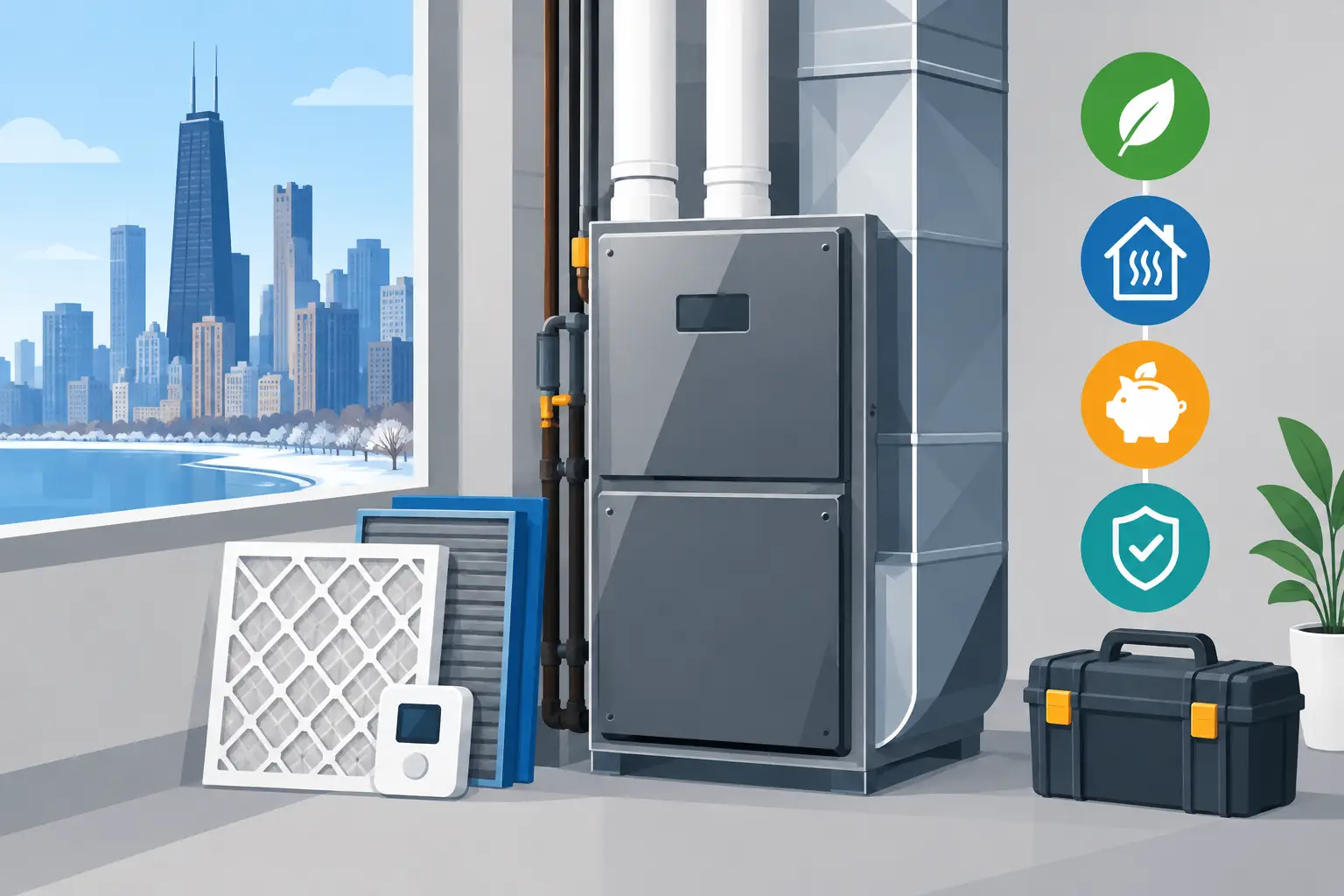
Best Furnace Efficiency Upgrades for Chicago Homes
A furnace can still produce heat and waste a surprising amount of fuel at the same time. If certain rooms stay cold, utility bills climb every winter, or the system runs longer than it used to, the best furnace efficiency upgrades may deliver more value than simply turning up the thermostat. For Chicago homeowners, landlords, and business operators, the right improvement depends on the furnace’s age, condition, ductwork, controls, and how the building holds heat.
A certified HVAC technician can identify where energy is being lost before recommending a major purchase. That matters because a new thermostat will not fix a failing heat exchanger, and a high-efficiency furnace will not perform at its best with leaking ducts or a dirty filter. Start with the upgrades that solve the actual problem.
Start With Maintenance and Airflow
The most affordable efficiency improvement is often professional furnace maintenance. A seasonal tune-up gives a technician the opportunity to clean key components, inspect electrical connections, check gas pressure, test safety controls, and confirm the system is heating properly. Small issues can force a furnace to run longer, use more fuel, and wear down faster.
Airflow deserves equal attention. A clogged filter restricts air movement, causing the furnace to work harder to circulate heat. Most standard filters should be checked monthly during heavy heating season and replaced based on their condition and the manufacturer’s guidance. Homes with pets, renovations, or high dust levels may need more frequent filter changes.
Duct problems can also drain efficiency. Heated air that escapes into an attic, basement, crawl space, or unused area is heat you already paid to produce. Leaky, crushed, poorly insulated, or undersized ducts can create uneven temperatures and long heating cycles. Duct sealing and insulation can be especially worthwhile when the furnace itself is still in good working condition.
Best Furnace Efficiency Upgrades to Consider
Not every upgrade belongs in every building. A dependable older furnace with a minor control issue may benefit most from maintenance and a thermostat upgrade. A unit nearing the end of its expected service life may justify replacement instead of repeated repairs. These are the improvements that most often make a measurable difference.
Install a programmable or smart thermostat
A programmable thermostat helps prevent unnecessary heating when a home or business is empty, overnight, or operating on a predictable schedule. Smart thermostats add features such as remote control, scheduling from an app, and temperature learning. They can be useful for property managers who need better oversight across occupied and vacant spaces.
The savings depend on how the thermostat is used. Setting temperatures drastically lower and then raising them repeatedly may not be practical for every building, especially in severe Chicago weather. The better approach is a steady, reasonable setback schedule that matches daily routines. Proper installation also matters because compatibility depends on the furnace, wiring, and any existing HVAC accessories.
Upgrade to a variable-speed blower motor
Many older furnaces use a standard single-speed blower. It runs at full power whenever the system calls for heat. A variable-speed blower can adjust airflow more precisely, often using less electricity while delivering more consistent temperatures throughout the building.
This upgrade can improve comfort as much as efficiency. Slower, longer airflow can reduce hot and cold spots, improve filtration, and make the system quieter. It may be a strong option during a furnace replacement, although retrofitting one into an existing system is not always cost-effective or compatible. A technician should evaluate the full furnace and duct system before recommending it.
Seal and balance the ductwork
Duct sealing is one of the most overlooked furnace upgrades. It is also one of the most practical when rooms heat unevenly or the furnace seems to run constantly. Professional sealing targets leaks at connections, joints, and supply or return pathways. Balancing adjustments can help direct the right amount of heated air to each room.
This work is particularly helpful in multi-level homes, older Chicago properties, and commercial spaces with additions or remodeled areas. It will not eliminate every comfort issue – insulation, windows, and building layout also affect room temperatures – but it can keep more heated air moving where it belongs.
Add or improve zoning controls
Zoning divides a building into separate temperature areas using dampers, controls, and thermostats. Instead of heating every room to the same setting, a zoned system can focus heat where people are working, sleeping, or living.
Zoning is not a simple add-on for every furnace. It requires compatible equipment and properly designed ductwork. Still, it can be a valuable improvement for larger homes, two-flat buildings, offices, and properties with areas that have very different heating needs. It is often most sensible during a larger HVAC renovation or system replacement.
Replace an aging furnace with a high-efficiency model
When a furnace is old, unreliable, or facing a costly repair, replacement may be the upgrade with the strongest long-term impact. Furnace efficiency is measured by Annual Fuel Utilization Efficiency, or AFUE. A furnace with a higher AFUE converts more of its fuel into usable heat, reducing waste through the venting process.
High-efficiency condensing furnaces typically offer AFUE ratings in the 90 percent range or higher. They recover additional heat from exhaust gases that standard furnaces send outside. That can reduce gas usage, but the purchase and installation cost is higher, and the system requires proper condensate drainage and venting.
The highest AFUE rating is not automatically the best choice. Correct sizing, quality installation, duct condition, and maintenance all affect real-world performance. An oversized furnace can heat a space too quickly, cycle on and off often, and create uneven comfort. A qualified load calculation helps match the new system to the building instead of guessing based on the old unit.
How to Prioritize Your Upgrade Budget
If the furnace is relatively new and operating safely, begin with maintenance, filter habits, thermostat controls, and airflow improvements. These lower-cost steps can address many common efficiency complaints without replacing equipment that still has useful life.
If repair calls are becoming frequent, the furnace struggles to maintain temperature, or the system is approaching 15 to 20 years old, ask for a clear repair-versus-replacement assessment. The decision should account for repair cost, safety, expected remaining life, energy use, and whether the building has persistent comfort problems that a new system design could solve.
For landlords and commercial property operators, reliability should carry real weight in the decision. A breakdown during a Chicago cold snap can disrupt tenants, employees, customers, and daily operations. Preventive upgrades can reduce the chance of an avoidable emergency while helping control operating costs over time.
Do Not Skip Safety Checks
Efficiency work should never take priority over furnace safety. Cracked heat exchangers, carbon monoxide concerns, flame problems, venting issues, and failed safety controls require prompt professional attention. If you smell gas, notice soot, hear unusual banging, or a carbon monoxide alarm activates, turn the system off if it is safe to do so and seek immediate help.
A furnace that runs efficiently should also run safely, quietly, and consistently. That is why a complete inspection is more useful than choosing an upgrade from a product list alone.
Reliable comfort starts with knowing what your furnace, ductwork, and thermostat are actually doing. A professional evaluation can turn high heating bills and uneven rooms into a focused plan – one that fits your building, your budget, and the winter ahead.