
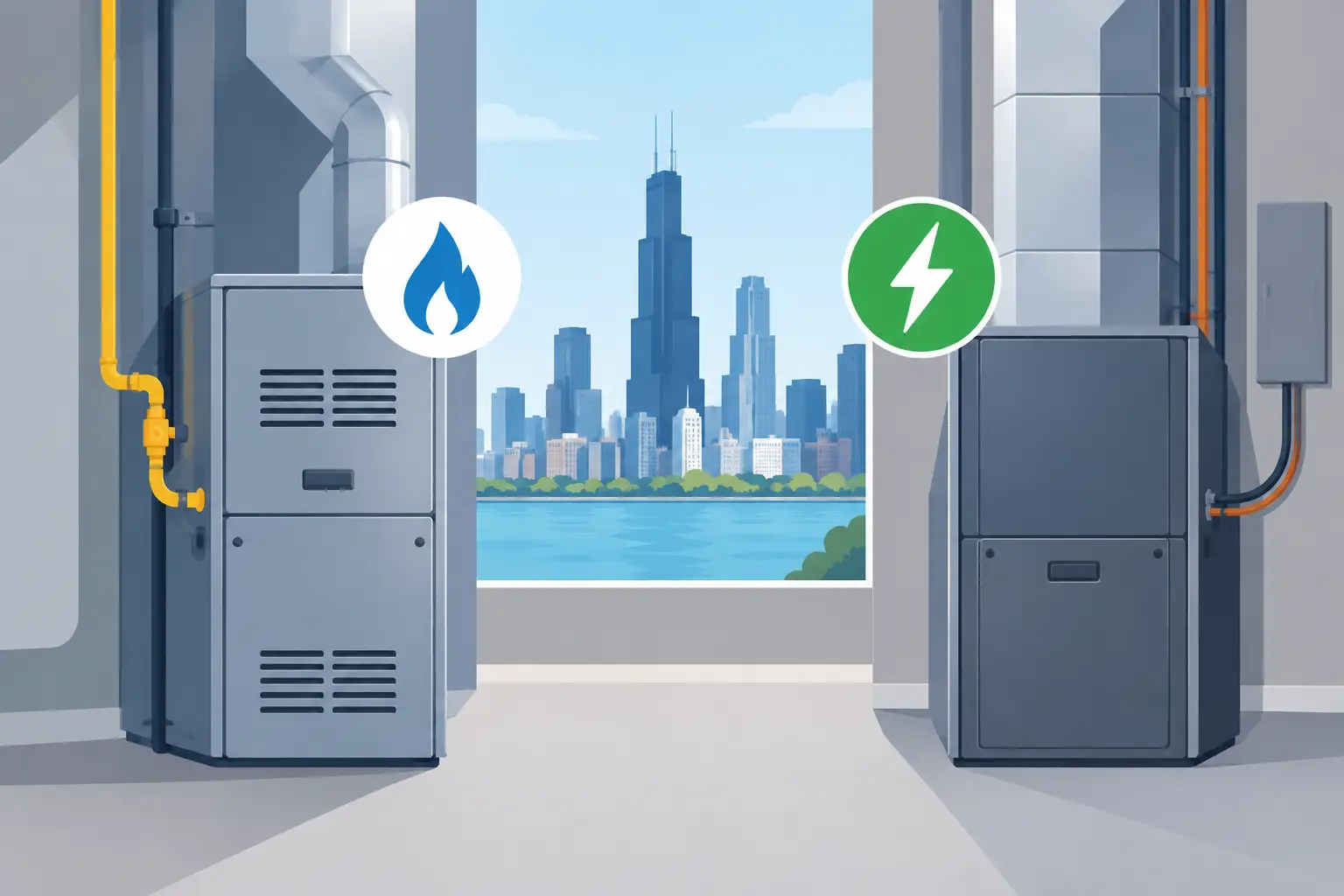
Gas Versus Electric Furnaces for Chicago Homes
A furnace decision feels different when a Chicago cold snap is on the way. You are not just comparing equipment labels. You are weighing monthly operating costs, installation needs, reliability, available utility service, and how quickly your property can recover if the heat goes out. When comparing gas versus electric furnaces, there is no single right answer for every home or commercial space. There is, however, a clear way to make the choice with fewer surprises.
For many properties in Chicago, a gas furnace remains the practical choice because natural gas is widely available and can provide strong heat at a manageable operating cost. An electric furnace can still make sense in specific situations, especially where gas service is unavailable, venting is difficult, or upfront installation simplicity matters most. The best system is the one that fits the building, budget, and long-term comfort plan.
How Gas and Electric Furnaces Create Heat
A gas furnace burns natural gas in a sealed combustion chamber. The heat moves through a heat exchanger, and the blower sends warmed air through the ductwork. Because combustion is involved, gas furnaces need proper venting, a functioning gas line, and professional installation. They also require regular maintenance to confirm safe operation.
An electric furnace uses electric resistance heating elements, similar in principle to the heating coils inside an appliance. Electricity passes through those elements, they get hot, and the blower distributes warm air through the home or business. There is no fuel combustion, no flue pipe, and no carbon monoxide produced by the furnace itself.
Both types can heat a building effectively when they are properly sized and installed. The larger difference is what it costs to generate that heat and what the property needs to support the system.
Gas Versus Electric Furnaces: The Cost Difference
The first price homeowners see is often the equipment and installation quote. That number matters, but it is only part of the picture. A furnace should serve the property for many winters, so operating costs, repair needs, and expected lifespan deserve equal attention.
Upfront installation costs
An electric furnace is often less expensive to install when the electrical service is already capable of supporting it. It does not require a gas line, vent piping, combustion air considerations, or a chimney connection. In a smaller space or a property without natural gas access, that simpler installation can be appealing.
A gas furnace generally costs more to install because the system has more components and safety requirements. If the building already has a working gas line, appropriate venting, and existing furnace connections, the difference may be reasonable. If gas must be brought to the property or venting must be redesigned, the project cost can increase.
Electrical capacity also matters. Electric furnaces can draw significant power, and some older Chicago buildings may need an electrical-panel upgrade before installation. That can erase the initial savings of choosing electric heat. A qualified HVAC technician should inspect the entire setup before recommending either option.
Monthly heating costs
In most Chicago-area homes, natural gas costs less than electricity for producing the same amount of heat. That is why gas furnaces are common in a climate with long, demanding heating seasons. Even a highly efficient electric furnace may cost more to run if local electricity rates are substantially higher than gas rates.
Electric furnaces are often described as 100% efficient because nearly all the electricity entering the unit becomes heat indoors. That statement is true at the equipment level, but it does not automatically mean lower utility bills. The cost of the energy source still determines what you pay each month.
High-efficiency gas furnaces typically have Annual Fuel Utilization Efficiency ratings of 90% to 98%. An AFUE of 95% means about 95 cents of every dollar spent on gas becomes usable heat, while the remainder is lost through the combustion process and venting. For a Chicago property replacing an older, lower-efficiency furnace, that improvement can make a noticeable difference in fuel use.
Repairs and system life
Electric furnaces have fewer combustion-related parts, which can mean fewer types of maintenance concerns. Heating elements, relays, wiring, and blower components can still fail, but the equipment is mechanically straightforward.
Gas furnaces have more safety-critical components, including the burner assembly, igniter, flame sensor, gas valve, pressure switches, and heat exchanger. That does not make gas furnaces unreliable. It means professional seasonal maintenance is especially valuable. A well-maintained gas furnace can often provide 15 to 20 years of service, while electric furnaces may last 20 years or longer under favorable conditions.
Age alone should not decide replacement. A system that needs frequent repairs, heats unevenly, makes unusual noises, or drives utility bills upward may be telling you it is time to evaluate replacement options.
Comfort and Performance During Chicago Winters
Chicago winters put heating systems to work. A furnace needs to hold a steady indoor temperature when outdoor conditions are far below freezing, not just perform well during mild weather.
Gas furnaces are known for delivering hotter supply air. Many people notice that a gas system feels warm quickly at the registers, which can be reassuring when the house has cooled down after a service interruption or a long day away. Proper sizing is still essential. An oversized gas furnace can cycle on and off too quickly, creating temperature swings, unnecessary wear, and less efficient operation.
Electric furnaces typically produce lower supply-air temperatures than gas units, although the air is still warm enough to heat the space. They may run longer to maintain temperature in severe cold. In a well-insulated building with correctly designed ductwork, that can provide consistent comfort. In a drafty older building, however, longer run times and higher electric bills can become frustrating.
Ductwork and thermostat control matter as much as the furnace type. Leaky ducts, blocked returns, poor insulation, and an inaccurate thermostat can make even a new furnace seem underpowered. Before replacing equipment, it is worth having the full heating system evaluated.
Safety, Maintenance, and Reliability
A properly installed gas furnace is safe, but it requires attention. Combustion creates exhaust gases that must leave the building through the correct venting system. A damaged heat exchanger, blocked vent, or failed safety control needs prompt professional service. Every property with fuel-burning equipment should have working carbon monoxide detectors on each level and near sleeping areas.
Electric furnaces eliminate combustion-related carbon monoxide risk inside the unit and do not need flue venting. However, they still require safe electrical connections, correct breaker sizing, and clear access for service. Dust buildup, failing wiring, or a damaged blower motor can affect performance and create repair concerns.
Neither system should be ignored until it fails. Before each heating season, schedule preventative maintenance to inspect operation, clean key components, test safety controls, check airflow, and catch small issues before they become a no-heat emergency. For landlords and commercial property managers, planned maintenance also helps reduce disruptions for tenants, employees, and customers.
When an Electric Furnace Makes Sense
An electric furnace may be a sensible choice if natural gas is not available, if adding gas service would be expensive, or if the property has an energy plan that makes electricity more affordable. It can also be useful in certain additions, small buildings, or locations where venting a gas appliance is impractical.
It may be less attractive for a larger Chicago home with high heating demand and standard utility rates. In that situation, the lower installation price can be outweighed by higher winter electricity costs. The only reliable answer comes from comparing the building’s heat load, utility rates, electrical capacity, and installation requirements.
There is one more option worth discussing during a replacement project: a cold-climate heat pump. A heat pump is not an electric furnace, even though it uses electricity. Instead of creating heat through resistance elements, it moves heat from outside air indoors. Some Chicago properties benefit from a heat pump paired with a gas furnace for backup heat, but the right design depends on the property and how the system will be used.
Choosing the Right Furnace for Your Property
For most homes and businesses with existing natural gas service, a high-efficiency gas furnace is often the stronger long-term value. It offers dependable high-output heat and can keep winter operating costs more predictable. Electric furnaces can be the right answer where gas access, venting, or installation conditions make a gas unit impractical.
Do not select a furnace based only on the size of the old unit or a price tag. A professional assessment should account for square footage, insulation, windows, ductwork, occupancy, equipment location, utility access, and the building’s actual heat loss. Correct sizing protects comfort, efficiency, and system life.
If your furnace is unreliable, your rooms heat unevenly, or your utility bills keep climbing, it is a good time to get clear answers before the next hard freeze. 4J’s Heating and Cooling can help Chicago-area property owners evaluate the system they have, understand practical replacement options, and restore dependable heat without guesswork.