Furnace Repair Versus Replacement Decisions
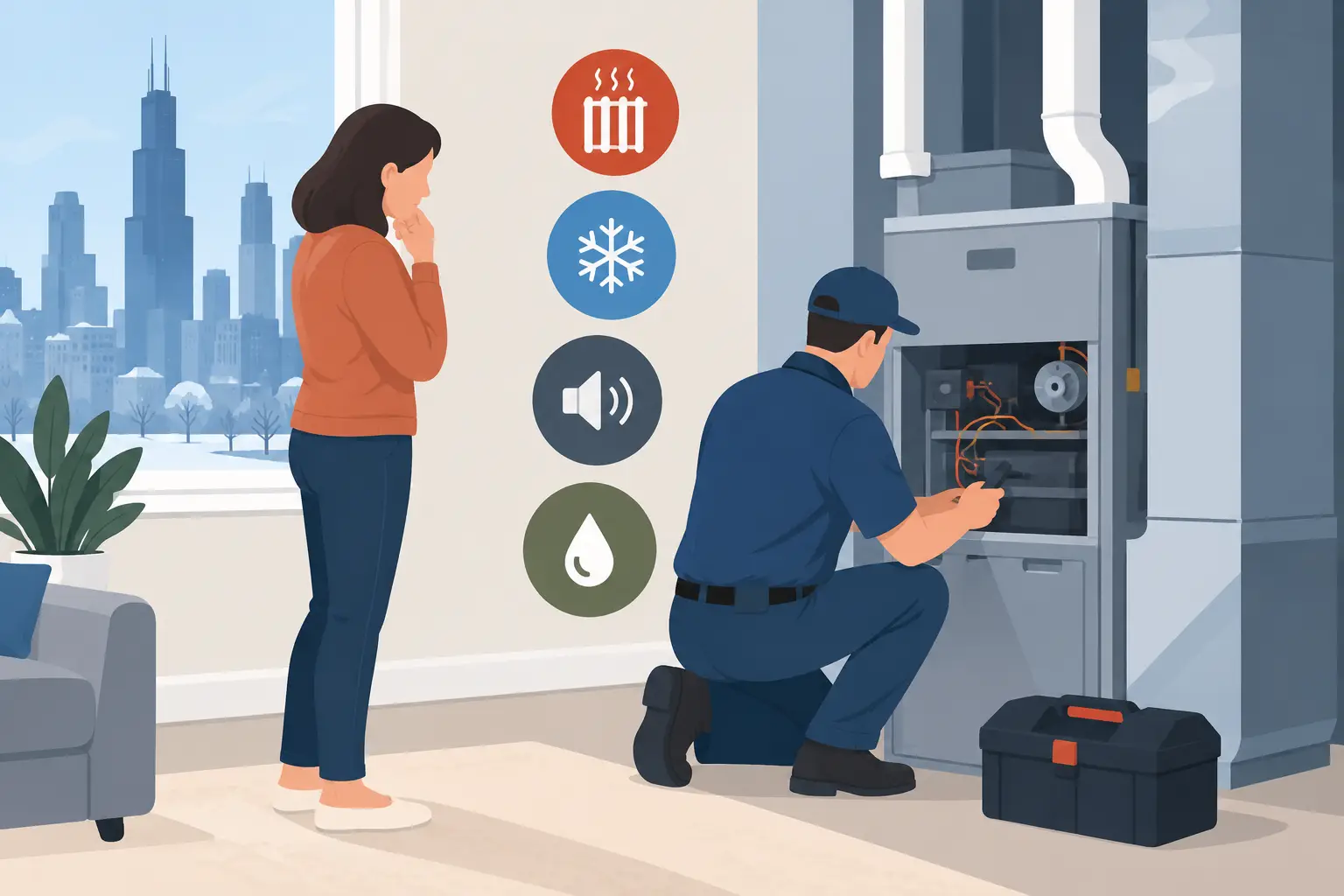
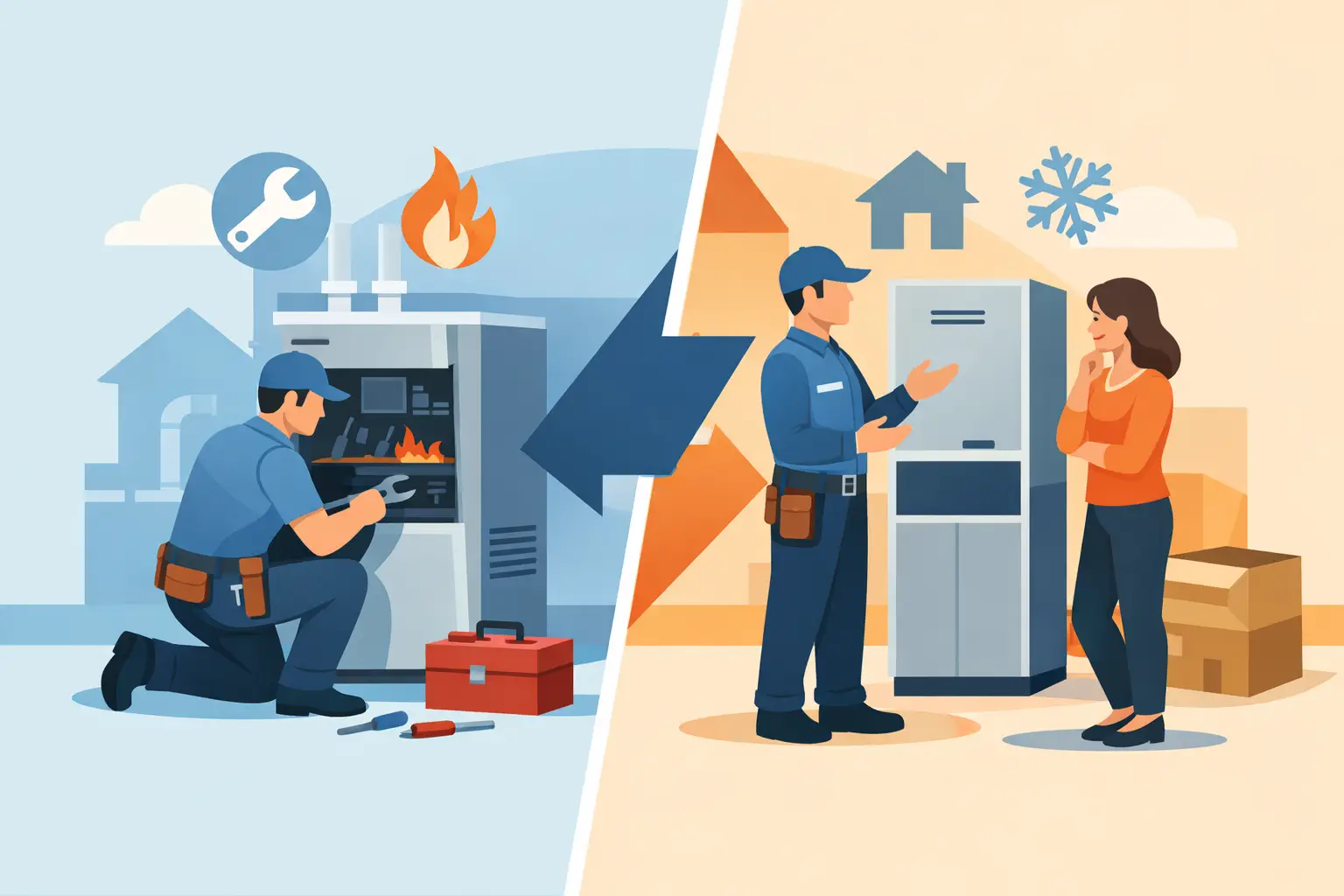
A furnace that quits on a below-freezing Chicago morning creates one urgent question: can it be fixed today? The larger question is whether furnace repair versus replacement makes better financial sense for your home, rental property, or business. The right answer is not always the cheapest option at the moment. It depends on the furnace’s age, the type of failure, repair history, safety, and what continued downtime could cost you.
A qualified technician should give you a clear diagnosis before pushing either path. Some problems are straightforward and affordable to correct. Others signal that an aging system is becoming unreliable, inefficient, or unsafe. Knowing the difference helps you make a confident decision instead of paying for a short-term fix that leads to another breakdown next month.
When Furnace Repair Is the Smart Choice
Repair is often the practical choice when the furnace is relatively new, has been maintained, and the problem is isolated. A failed igniter, worn flame sensor, damaged thermostat, clogged drain line, loose electrical connection, or minor blower issue can often be repaired without changing the entire system.
If your furnace is under 10 years old and has not needed repeated major work, a repair can protect the value of the equipment you already own. This is especially true when the repair cost is modest compared with the price of a properly sized new installation.
A repair also makes sense when the system has otherwise been heating evenly, operating quietly, and keeping energy bills predictable. One bad part does not automatically mean the furnace is at the end of its life. Certified technicians can test the system, confirm the source of the issue, and explain whether the repair is likely to restore dependable operation.
For commercial properties, quick repair may be the best operational decision when the equipment is serviceable and downtime affects tenants, employees, customers, or inventory. Restoring heat fast matters, but the repair should still address the actual cause rather than simply reset the system and hope the problem stays away.
Furnace Repair Versus Replacement: The Cost Question
Many property owners hear a repair estimate and immediately compare it to the cost of a new furnace. That comparison is necessary, but it should not be the only one. A lower repair bill is not always lower cost over the next few years.
Start with the age of the equipment. Most furnaces can last roughly 15 to 20 years with proper maintenance, though lifespan varies based on installation quality, usage, airflow, maintenance history, and the stress of Chicago winters. Once a furnace is in its later years, major repairs become harder to justify because additional components may be nearing the end of their service life too.
A useful rule of thumb is to multiply the repair cost by the furnace’s age. If the result is greater than the cost of replacement, it is worth seriously considering a new system. For example, a $1,200 repair on a 16-year-old furnace equals 19,200. That does not make replacement automatic, but it signals that the repair deserves a closer look.
Also consider the pattern, not just the current breakdown. A furnace that needs an occasional small repair is different from one that has required repeated service calls for ignition problems, blower failures, control-board issues, or overheating. Multiple repairs add up financially and create the bigger cost of uncertainty when cold weather arrives.
Signs Replacement May Be the Better Investment
Replacement is often the stronger long-term choice when the furnace is near the end of its expected lifespan and needs a major component. A cracked heat exchanger is a clear example. This part separates combustion gases from the air moving through your home or building. A crack can create a carbon monoxide risk and should be addressed immediately by a professional.
Other warning signs include frequent cycling, loud banging or rattling, uneven heating, persistent burning smells, rising utility bills without a clear explanation, and repairs that do not hold. These issues can have repairable causes, so they should never be diagnosed from symptoms alone. Still, they can indicate an aging system that is losing reliability.
Replacement may also be the better answer if your current furnace is oversized, undersized, or poorly matched to your ductwork. A new furnace is not simply a box swap. Proper sizing, airflow, venting, thermostat setup, and installation quality all affect comfort, efficiency, and equipment life. Installing the wrong size can leave you with hot and cold rooms, short cycling, extra wear, and disappointing energy savings.
For landlords and property managers, a planned replacement can prevent the disruption of an emergency failure. For business owners, it can protect operating hours and customer comfort. Scheduling a replacement before the furnace fully fails gives you more control over timing, equipment options, and budget.
Safety Changes the Decision
No comfort decision is more important than safety. Turn the furnace off and request professional service right away if you smell gas, notice soot around the unit, see a yellow or flickering burner flame instead of a steady blue flame, or have a carbon monoxide alarm activate. Leave the building and contact emergency services or the gas utility when there is a suspected gas leak or carbon monoxide emergency.
A furnace that repeatedly trips a breaker, overheats, or shuts down unexpectedly also needs prompt attention. These problems may be caused by airflow restrictions, electrical faults, or failed safety controls. Do not bypass switches, tape down panels, or keep restarting the furnace to get through the night. A fast repair is valuable only when it is performed safely and correctly.
Efficiency Is More Than a Sales Number
An older furnace may still run, but it may use more fuel than necessary to deliver the same heat. Newer high-efficiency equipment can reduce wasted energy, particularly when paired with proper installation, sealed ductwork, clean filters, and a correctly programmed thermostat.
That said, replacement does not guarantee dramatic savings in every building. A home with poor insulation, leaky ducts, or thermostat problems may still feel uncomfortable after a new furnace is installed. Before making the investment, ask what condition your ductwork, airflow, and controls are in. A good recommendation addresses the whole heating system, not just the furnace cabinet.
The same applies to commercial spaces. Building use, occupancy schedules, zoning, ventilation needs, and rooftop or mechanical-room access can all affect whether repair or replacement makes the most sense. The best solution balances upfront cost with dependable performance and future operating expenses.
How to Make a Clear Decision
Ask for a diagnosis in plain language. You should know what failed, why it likely failed, what the repair includes, and whether other worn components could create near-term problems. If replacement is recommended, ask why repair is not the better value and what efficiency, warranty, sizing, and installation work are included in the proposal.
Do not let a lack of heat force you into a decision without answers. Emergency service can restore comfort quickly, while a straightforward assessment can help you decide whether that repair buys you years of dependable operation or only a little more time.
Regular maintenance gives you more choices. Annual service can identify dirty burners, weak ignition components, airflow restrictions, and developing safety concerns before they become a no-heat call. It also helps a technician track the condition of an aging furnace so replacement can be planned rather than rushed.
When the heat is out, dependable help should come first. Once the system is safe and the cause is clear, the better decision becomes easier: repair the furnace when the fix restores reliable value, or replace it when continued repairs are costing more comfort, money, and peace of mind than a new system would.