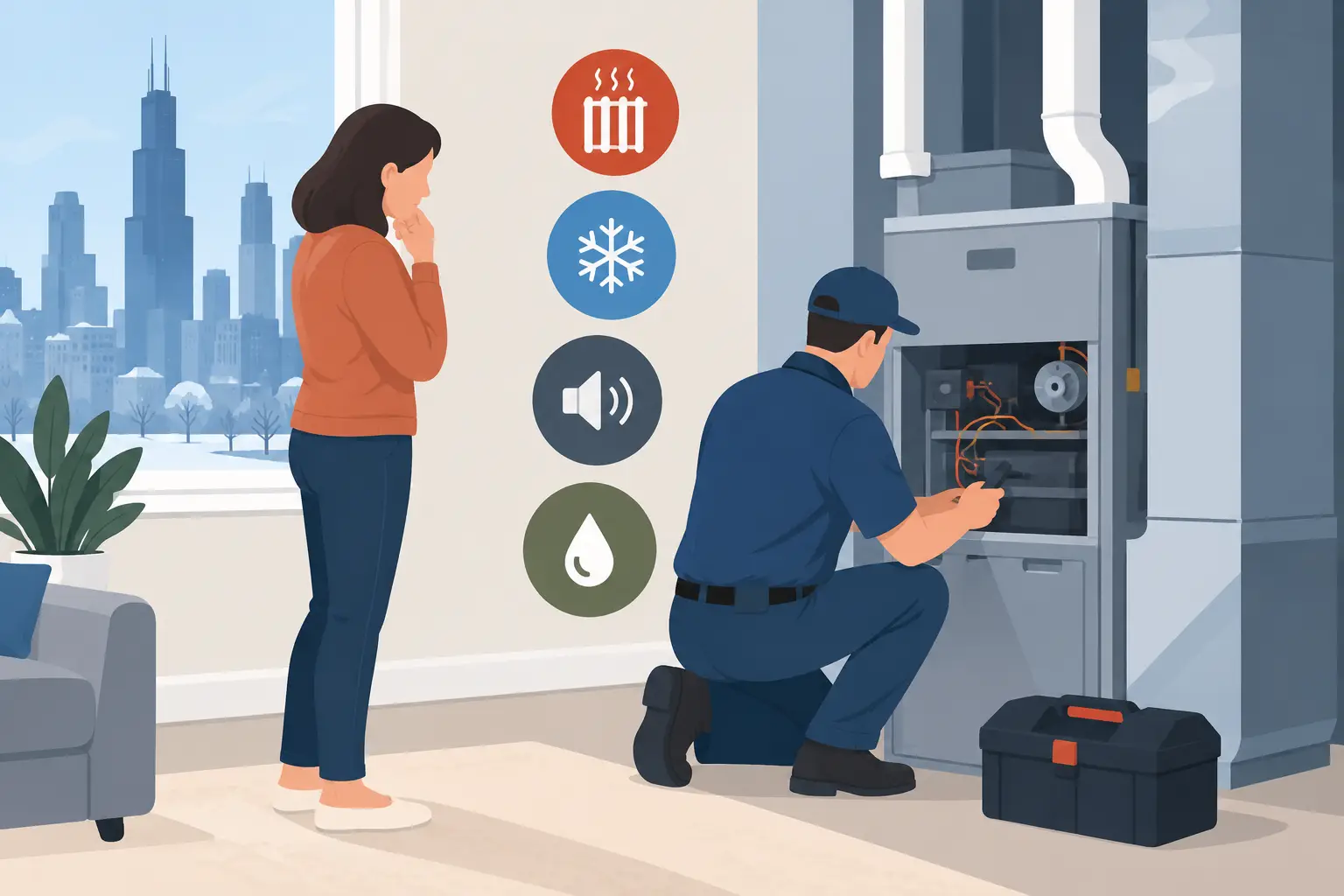
Why Is AC Leaking Water? Causes and Fixes
A puddle beneath an indoor AC unit is more than an inconvenience. It can stain ceilings, damage drywall, ruin flooring, and create the kind of moisture problem that gets worse quickly in a Chicago home or commercial property. If you are asking, “why is AC leaking water?” the short answer is that your system is not draining condensation the way it should. The reason can be simple, such as a clogged drain line, or it can point to a repair that needs prompt attention.
Your air conditioner naturally creates water as it removes humidity from indoor air. That moisture should collect in a drain pan and move safely outside through a condensate line. When any part of that process fails, water can spill where it does not belong.
Why Is AC Leaking Water Indoors?
The most common cause is a blocked condensate drain line. Over time, dust, algae, mold, and debris can build up inside the narrow pipe that carries moisture away. Once the line clogs, water backs up into the drain pan and eventually overflows. You may notice dripping around the indoor unit, water near a utility closet, or a wet spot on the ceiling below an attic air handler.
A clogged line is often repairable, but it should not be ignored. The longer water sits in or around the equipment, the greater the risk of property damage and indoor air-quality concerns. A technician can clear the line properly, check the drain connection, and confirm that water is moving where it should.
A Dirty Air Filter Can Freeze the Coil
A severely dirty filter restricts airflow across the evaporator coil. Without enough warm air moving over that coil, it can become cold enough to freeze. When the ice later melts, the amount of water can overwhelm the drain pan or expose an existing drainage issue.
Look for weak airflow from vents, ice on refrigerant lines, a system that runs constantly without cooling well, or water appearing after the AC shuts down. Replace a disposable filter if it is visibly loaded with dust. If the coil is frozen, turn the cooling system off and let it thaw. Do not chip ice off the coil or keep running the AC in hopes that it will clear itself.
A dirty filter is not always the whole problem. Low refrigerant, a failing blower motor, or blocked ductwork can also cause coil freeze-ups. If freezing happens again after installing a clean filter, schedule professional AC service.
The Drain Pan May Be Damaged or Misaligned
Older systems can develop rusted, cracked, or improperly positioned drain pans. A pan beneath the evaporator coil may hold water for years before corrosion creates a leak. In some installations, a secondary safety pan is also used beneath the unit. If that pan fills with water, it is warning you that the primary drain is not working.
Drain-pan repairs depend on the system design and the condition of the equipment. Some pans can be replaced. Others are difficult to access and may make more sense to address during a larger repair or replacement discussion. A qualified technician should inspect the source before recommending the right option.
A Disconnected or Poorly Installed Drain Line
A condensate line can come loose at a fitting, develop a crack, or lose the proper slope needed for drainage. This is more common after equipment has been moved, renovated around, or installed without careful attention to the drain setup. Water may leak only while the AC is running, making the issue easy to miss until it becomes a larger puddle.
High-efficiency equipment sometimes uses a condensate pump to move water upward or across a longer distance to a drain. If that pump loses power, the float switch fails, or the pump itself wears out, condensation has nowhere to go. You may hear unusual buzzing, notice the pump reservoir is full, or see water near the furnace or air handler.
Low Refrigerant Can Lead to Excess Water
Refrigerant does not get “used up” under normal operation. If the level is low, there is usually a leak that needs to be located and repaired. Low refrigerant can make the evaporator coil freeze, and the thawing process can create significant water runoff.
This is not a do-it-yourself fix. Refrigerant work requires the right equipment, training, and safe handling procedures. Adding refrigerant without repairing the leak only delays the problem and can put more strain on the system.
What to Do When Your AC Is Leaking Water
The right response depends on where the water is coming from and how much is present. A small amount of condensation outdoors can be normal. Water indoors, around the furnace, air handler, ceiling, or wall is not.
Take these steps to limit damage while you arrange service:
- Turn the AC off at the thermostat if water is actively leaking indoors or if you see ice on the unit or refrigerant line.
- Place towels or a shallow container under the leak if it is safe to do so, and move nearby belongings away from the water.
- Check the air filter and replace it if it is dirty or overdue for replacement.
- Avoid pouring harsh chemicals into the drain line, taking panels apart, or operating the system if water is near electrical components.
If water is close to wiring, an electrical panel, or the furnace controls, do not touch the equipment. Shut off power only if you can do so safely and call for professional help. For businesses, act quickly to protect stock, work areas, and customer spaces. A small HVAC drainage problem can become an interruption to daily operations if it is left overnight.
When an AC Water Leak Needs Immediate Repair
Some leaks can wait for a regular service appointment, but others deserve same-day attention. Call for fast HVAC repair if water is coming through a ceiling, the unit repeatedly freezes, the leak returns after you replace the filter, or your AC is no longer cooling effectively. A musty odor, visible mold, or a full secondary drain pan also signals that the problem has likely been developing for longer than it appears.
Property managers should take recurring water around an air handler seriously, especially in multi-unit buildings. One clogged drain line can affect more than one level of a property. Documenting the leak, protecting the area, and having the equipment inspected promptly can prevent a minor maintenance issue from becoming a tenant disruption or insurance claim.
At 4J’s Heating and Cooling, certified technicians can identify whether the problem is a clogged line, a frozen coil, a failing pump, or a larger equipment issue. Clear communication matters: you should know what caused the leak, what repair is recommended, and what can help prevent a repeat problem.
How Preventive Maintenance Helps Stop Future Leaks
Most AC water leaks are not sudden mysteries. They are often the result of neglected filters, gradual drain buildup, or an issue that routine maintenance could have caught early. Seasonal service gives a technician a chance to inspect the condensate drain, clean components, check airflow, look for coil icing, and test safety controls before the hottest days put the system under heavy demand.
For homeowners, a practical filter schedule is one of the easiest protections. Check it monthly during high-use periods and replace it according to the filter type, your household, pets, and indoor air conditions. For commercial properties, maintenance should match the building’s occupancy and operating hours. A busy office, restaurant, or retail space may need more frequent attention than a lightly used property.
Keep the area around indoor HVAC equipment clear as well. Stored boxes and clutter make leaks harder to spot and can delay access when service is needed. If your system has a condensate pump, pay attention to new noises or water around the pump reservoir rather than waiting for an overflow.
Water coming from your AC is a signal to act, not a problem to cover with a towel and forget. Turning the system off when necessary and getting the drain, coil, and airflow checked early can protect your property, restore reliable cooling, and help your equipment last longer.