Why Does Furnace Smell Burning? What to Do
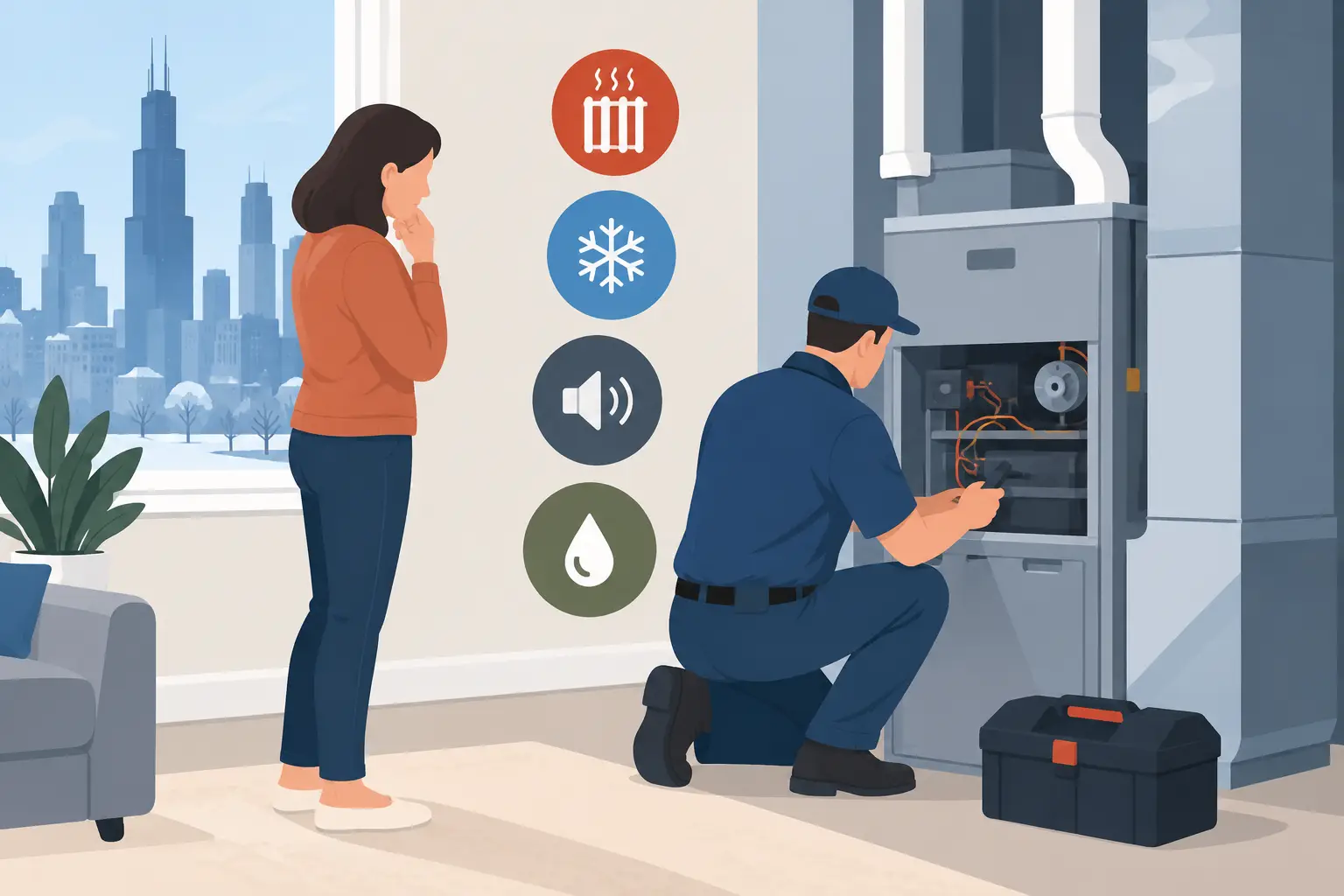
A furnace odor can turn a cold Chicago morning into a real concern fast. So, why does furnace smell burning when you switch it on? Sometimes it is a harmless layer of dust heating up after months of sitting idle. Other times, that smell points to an electrical problem, an overheating part, or a safety issue that needs immediate attention.
The key is not to ignore it or assume every odor is normal. Notice what the smell resembles, how long it lasts, and whether it comes with smoke, unusual sounds, or a furnace that shuts down. Those details help determine whether you can monitor the system or should turn it off and call for service.
Why does a furnace smell burning after starting?
The most common explanation is dust. During the off-season, dust settles on the heat exchanger, burners, and nearby furnace components. When the furnace first runs in fall or early winter, that dust burns away and can create a dry, dusty, slightly burning odor.
A dust smell should fade within a few heating cycles, often within 15 to 30 minutes of operation. Opening interior doors and ensuring supply vents are not blocked can help air move through the home. Replacing a dirty air filter is also a smart first step, since restricted airflow can make the system work harder than it should.
This normal startup smell should not be thick, sharp, smoky, or persistent. If it returns every time the furnace runs, gets stronger, or remains after a day or two, schedule a professional inspection. A furnace should provide heat, not keep filling the property with concerning odors.
Burning smells that need a fast response
Not every burning smell means the same thing. The character of the odor can offer useful clues, but it is not a substitute for a qualified diagnosis.
Electrical or burning plastic smell
A sharp smell similar to hot wiring, melting plastic, or overheated electronics is a reason to act quickly. It may come from damaged wiring, a failing blower motor, a worn capacitor, a control board issue, or an overheating electrical connection. Continuing to operate the furnace can damage components and may create a fire risk.
Turn the thermostat to off. If the odor continues, shut off power to the furnace at the breaker only if it is safe to do so. Do not remove panels or attempt electrical repairs yourself. Call an HVAC technician for a prompt inspection.
Smoke or a strong hot-metal odor
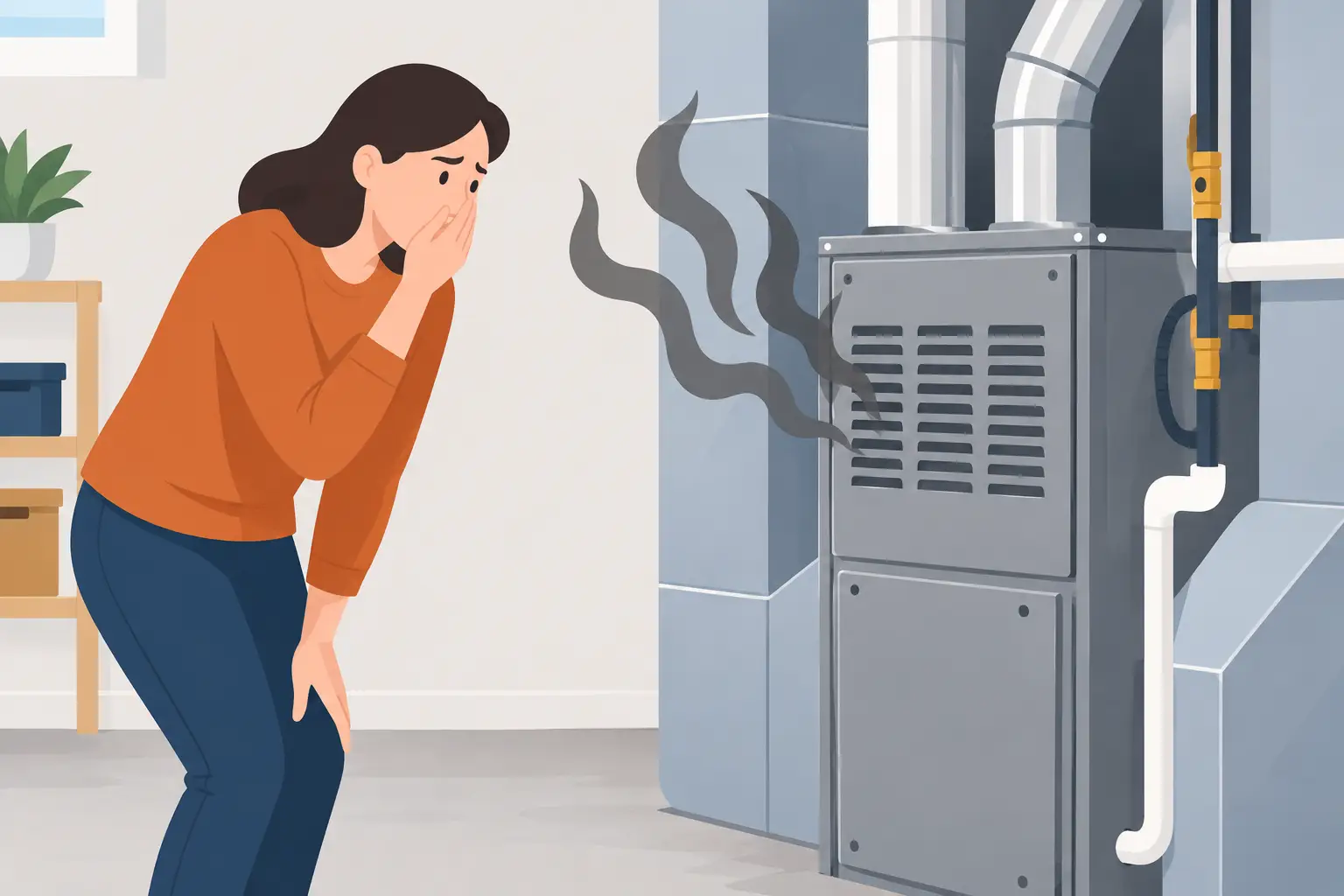
Visible smoke is never a wait-and-see situation. Turn off the furnace, leave the area if smoke is heavy, and call emergency services if you believe there is an active fire. Once the immediate danger is addressed, a licensed HVAC professional can determine whether the issue involves a motor, belt, wiring, debris, or another failed part.
A brief hot-metal smell can occur as a system warms up, particularly on older equipment. But a strong odor that keeps coming back may indicate overheating, poor airflow, or a mechanical component under strain.
Oil, rubber, or burnt fabric smell
A burning-rubber odor can occur when a belt-driven blower system has a worn or slipping belt. While many newer furnaces use direct-drive motors, older systems may still have belts that need adjustment or replacement. A failing motor can create a similar smell as it overheats.
Burnt fabric or paper odors may mean an object has fallen near the furnace or is too close to a supply register. Check the area around the equipment without touching hot surfaces. Keep storage, cardboard, paint, cleaning products, and other combustible materials away from the furnace at all times.
Musty or dirty-burning odor
A clogged filter, dirty blower compartment, or dust buildup in ductwork can make heated air smell stale or dirty. This may not be an emergency, but it can affect comfort, airflow, and indoor air quality. Start with the filter. If a clean filter does not improve the odor, a maintenance visit can identify whether the blower, evaporator coil, ductwork, or furnace interior needs attention.
When a burning smell is a safety concern
A furnace burning smell becomes more urgent when it is paired with warning signs. Do not keep testing the system if you notice smoke, sparks, frequent breaker trips, loud buzzing, banging, or a furnace that repeatedly starts and stops.
Gas odors require a different response. Natural gas is often described as smelling like rotten eggs or sulfur, not like burning dust. If you smell gas, do not operate switches, light matches, use a phone near the leak, or restart the furnace. Leave the building, then contact your gas utility or emergency services from a safe location. After the property is cleared, arrange for furnace service.
Carbon monoxide has no smell at all. That is why working carbon monoxide detectors are essential near sleeping areas and on every level of a home or building. If a detector sounds, get everyone outside immediately and call emergency services. Do not re-enter until authorities say it is safe.
For landlords and commercial property managers, a furnace odor should be handled with the same urgency. Tenants, employees, customers, and equipment all depend on reliable heat. Fast action can prevent a small repair from becoming downtime, property damage, or an avoidable safety event.
What you can check before calling for furnace repair
If there is no smoke, gas odor, sparking, or carbon monoxide alarm, a few basic checks may help. Make sure the thermostat is set to heat and the filter is clean and installed correctly. A heavily loaded filter restricts airflow, which can raise operating temperatures and contribute to burning odors.
Next, look at the area around the furnace. Remove stored items that are too close, but do not open the furnace cabinet or touch internal components. Check that supply and return vents throughout the property are open and not covered by rugs, furniture, or boxes. Closing too many vents can also restrict airflow.
Then pay attention to timing. A dusty startup odor that fades quickly may be normal. An odor that intensifies, repeats throughout the season, or occurs alongside weak airflow and unusual noises is not something to manage with filter changes alone. Professional testing identifies the actual source and protects the system from further strain.
How preventative maintenance reduces furnace odors
Annual furnace maintenance is one of the best ways to avoid surprise odors during the first cold stretch. A technician can inspect electrical connections, test safety controls, clean key components, check the blower, evaluate airflow, and look for signs of overheating or wear. This work supports efficient operation and can extend the life of the equipment.
Maintenance is especially valuable before a Chicago winter puts your heating system under continuous demand. For commercial properties, planned service also helps reduce disruptions during business hours and gives managers a clearer picture of equipment condition before a breakdown occurs.
Changing filters on schedule matters too. The right replacement interval depends on the filter type, number of occupants, pets, dust levels, and how often the system runs. Many homes need a check every one to three months. A technician can recommend an appropriate filter and maintenance schedule for your equipment rather than relying on a one-size-fits-all rule.
Get clear answers before a small issue grows
A burning smell may be ordinary dust, but your furnace should not produce ongoing smoke, melting-plastic odors, or signs of electrical overheating. When you are unsure, shutting the system down and getting a professional opinion is the safer, more affordable decision.
4J’s Heating and Cooling provides dependable furnace inspection and repair for homeowners, landlords, and businesses that need clear answers and prompt service. A quick call today can protect your comfort, your equipment, and the people inside your property.