
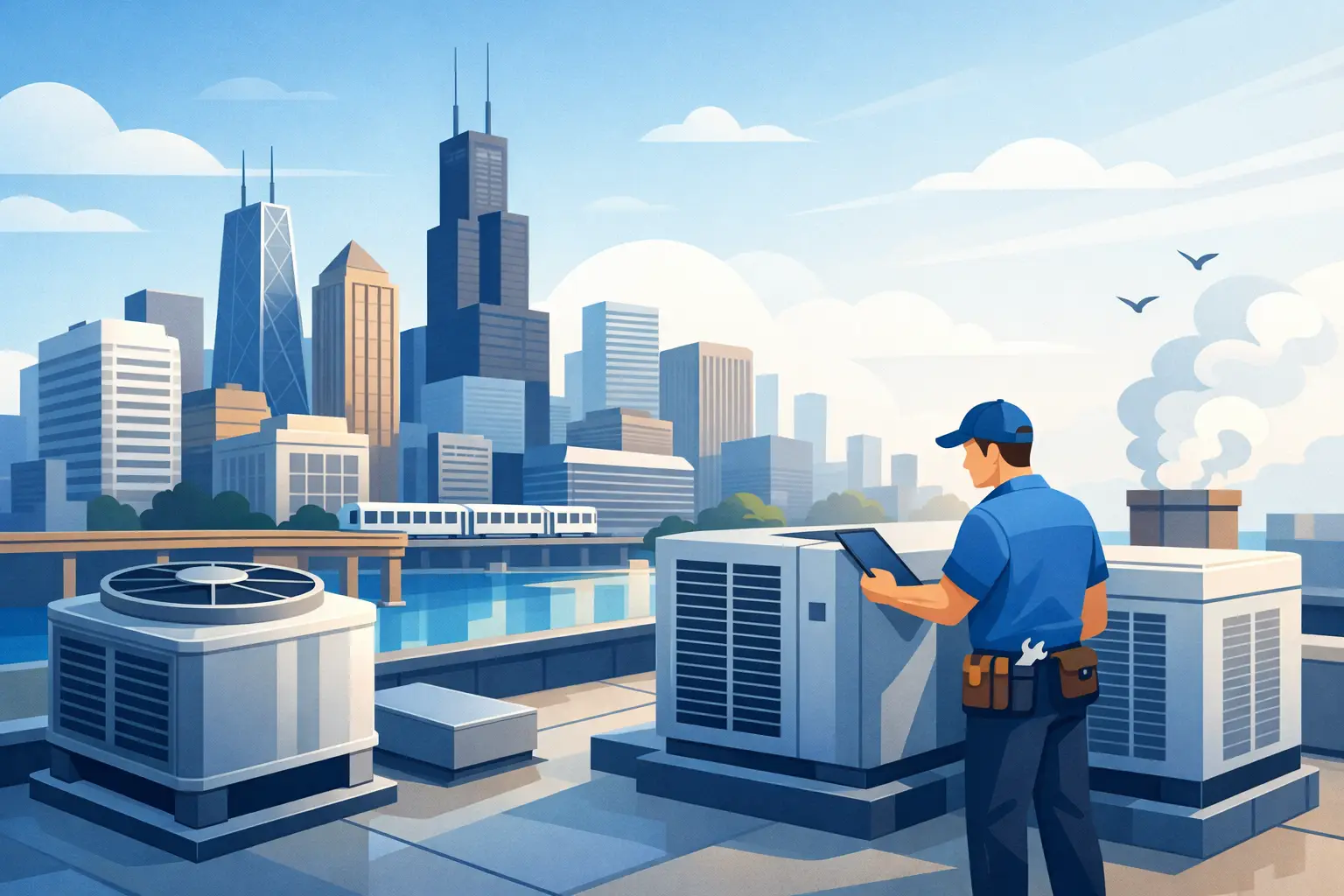
Commercial HVAC That Keeps Chicago Businesses Running
A failed rooftop unit on a July afternoon can empty a restaurant dining room. A boiler problem during a Chicago cold snap can stop work, frustrate tenants, and put pipes at risk. Commercial HVAC is not just another building expense. It is the system that protects daily operations, employee productivity, customer comfort, and equipment reliability.
For business owners, landlords, and property managers, the goal is simple: keep the building comfortable without getting surprised by major repair bills or disruptive downtime. That takes fast service when something goes wrong, but it also takes a practical plan for maintenance, repairs, and eventual equipment replacement.
What Commercial HVAC Covers
Commercial heating and cooling systems are designed to serve larger spaces, longer operating hours, and more demanding conditions than most home systems. Depending on the property, the equipment may include rooftop units, furnaces, boilers, air conditioners, heat pumps, ventilation equipment, ductwork, thermostats, zoning controls, exhaust systems, and indoor air quality components.
A small office may rely on one packaged rooftop unit. A multi-tenant building may have several systems with separate controls, while a restaurant, retail store, warehouse, or medical office may need specialized ventilation and temperature management. The right service approach depends on how the building is used, how many people occupy it, and which areas need independent temperature control.
That is why a quick diagnosis matters. Replacing a part without finding the cause of the failure can lead to another breakdown soon after. A qualified technician should explain what failed, why it failed, what repair options are available, and whether the system is still a sensible candidate for repair.
The Cost of Waiting on HVAC Problems
Commercial equipment rarely chooses a convenient time to fail. It often breaks down when it is working hardest, such as during extreme heat, freezing weather, or a busy shift. Waiting on a minor issue can turn an affordable repair into a larger service call, a damaged component, or a complete system shutdown.
Warning signs are often easy to notice before a full failure occurs. Uneven temperatures, unusual noises, weak airflow, frequent cycling, water around equipment, rising utility bills, and complaints from employees or tenants all deserve attention. A thermostat that will not hold the set temperature may look like a control issue, but it can also point to airflow restrictions, refrigerant problems, electrical faults, or equipment that is struggling to keep up.
For commercial properties, comfort complaints are also business signals. If one office is always too warm, a retail area feels humid, or a tenant repeatedly calls about heat, the system may need more than a thermostat adjustment. Ignoring those patterns can affect lease satisfaction, customer experience, and operating costs.
Preventative Maintenance Protects Your Budget
Emergency repair is sometimes unavoidable. Preventative maintenance is how many businesses reduce the chances of it happening at the worst possible time. Seasonal service gives technicians the opportunity to inspect equipment, identify wear, clean critical components, and correct smaller issues before demand on the system increases.
A useful maintenance visit often includes checking filters, belts, motors, electrical connections, condensate drainage, refrigerant performance, burners or heating components, safety controls, and thermostat operation. Technicians should also look for airflow problems, duct leakage, and signs that a unit is short cycling or running longer than it should.
There is no single maintenance schedule that fits every building. A lightly used office may need a different plan than a restaurant with kitchen exhaust, a busy retail location with doors opening all day, or a multi-unit property with aging equipment. In most cases, commercial systems should be checked before cooling season and before heating season. High-use equipment may need more frequent attention.
Maintenance does not guarantee that a part will never fail. It does improve the odds that problems are found early, and it gives property decision-makers a clearer picture of what may need to be budgeted for next. That is valuable when replacement costs need to be planned rather than rushed.
Repair or Replace? Make the Decision With Facts
When equipment fails, the lowest immediate price is not always the lowest total cost. A repair may be the right choice when the unit is relatively new, the problem is isolated, replacement parts are available, and the system has otherwise performed well. For a newer system with a failed capacitor, ignition component, blower motor, or control issue, repair is often straightforward.
Replacement deserves a serious discussion when breakdowns are becoming frequent, utility costs are climbing, major components are failing, or the system no longer provides dependable heating or cooling. Older equipment can also be harder and more expensive to repair when parts are obsolete or refrigerant options are limited.
Efficiency matters, but it should not be the only factor. A high-efficiency system can lower operating costs, yet it needs to be properly sized and installed to deliver those benefits. An oversized unit may cycle too often and struggle with humidity control. An undersized unit may run continuously and still leave parts of the building uncomfortable.
A dependable contractor should assess the building’s layout, occupancy, insulation, ventilation needs, existing ductwork, and operating schedule before recommending a new system. The right replacement should fit the property, not simply match the old unit’s nameplate.
Better Controls Can Solve Everyday Comfort Problems
Many commercial comfort issues are control issues. An outdated thermostat, poor sensor placement, or one-temperature-for-everyone approach can make a functioning HVAC system seem inadequate. Modern programmable and smart thermostat options can help businesses set schedules, reduce unnecessary runtime, and manage temperatures more consistently.
Zoning can be especially useful in properties with different needs across the building. A sunny front office, a server room, a warehouse, and a customer-facing area may not need the same temperature at the same time. Separate controls can improve comfort and reduce wasted energy, although zoning requires the right equipment design and may not be practical for every existing system.
Simple operational habits matter, too. Keep supply and return vents clear, replace filters on schedule, report unusual sounds quickly, and avoid changing thermostat settings repeatedly throughout the day. Small adjustments made without understanding the system can mask the actual problem or put more strain on the equipment.
What to Expect From Commercial HVAC Service
When a heating or cooling issue affects your business, communication matters as much as technical skill. You need a technician who arrives as scheduled, diagnoses the issue clearly, and gives you practical options without confusing jargon. For urgent failures, fast response can protect operations and help avoid bigger damage.
A professional commercial service call should begin with questions about the symptoms, when they started, which areas are affected, and whether the issue is constant or intermittent. The technician should inspect the system, test key components, and explain the recommended repair before work begins whenever possible.
For planned work, clear scheduling is just as important. Businesses often need repairs, installations, and maintenance coordinated around customers, staff, tenants, or building access. The best plan minimizes disruption while still giving the technician enough time to complete the work correctly.
4J’s Heating and Cooling provides commercial HVAC repair, installation, replacement, and preventative maintenance for businesses and properties in Chicago’s 60641, 60625, and 60630 areas. When an unexpected failure cannot wait, around-the-clock emergency support helps business owners respond quickly and restore dependable comfort.
A Practical Way to Stay Ahead
Start by keeping a record of each unit’s age, repair history, maintenance dates, and recurring concerns. This does not need to be complicated. A simple equipment log can reveal patterns, such as a unit that needs the same repair every season or a location where comfort complaints keep returning.
Then schedule service before the season puts the most pressure on your system. Addressing a weak blower, dirty coil, worn belt, or unreliable thermostat before peak demand is usually easier than managing a full shutdown during a heat wave or freezing night.
Your building should support the work happening inside it. When heating and cooling are dependable, employees can focus, customers stay comfortable, and property managers spend less time reacting to avoidable emergencies. If your system is making noise, driving up energy costs, or leaving parts of the building uncomfortable, getting a professional assessment now can save a much harder decision later.