
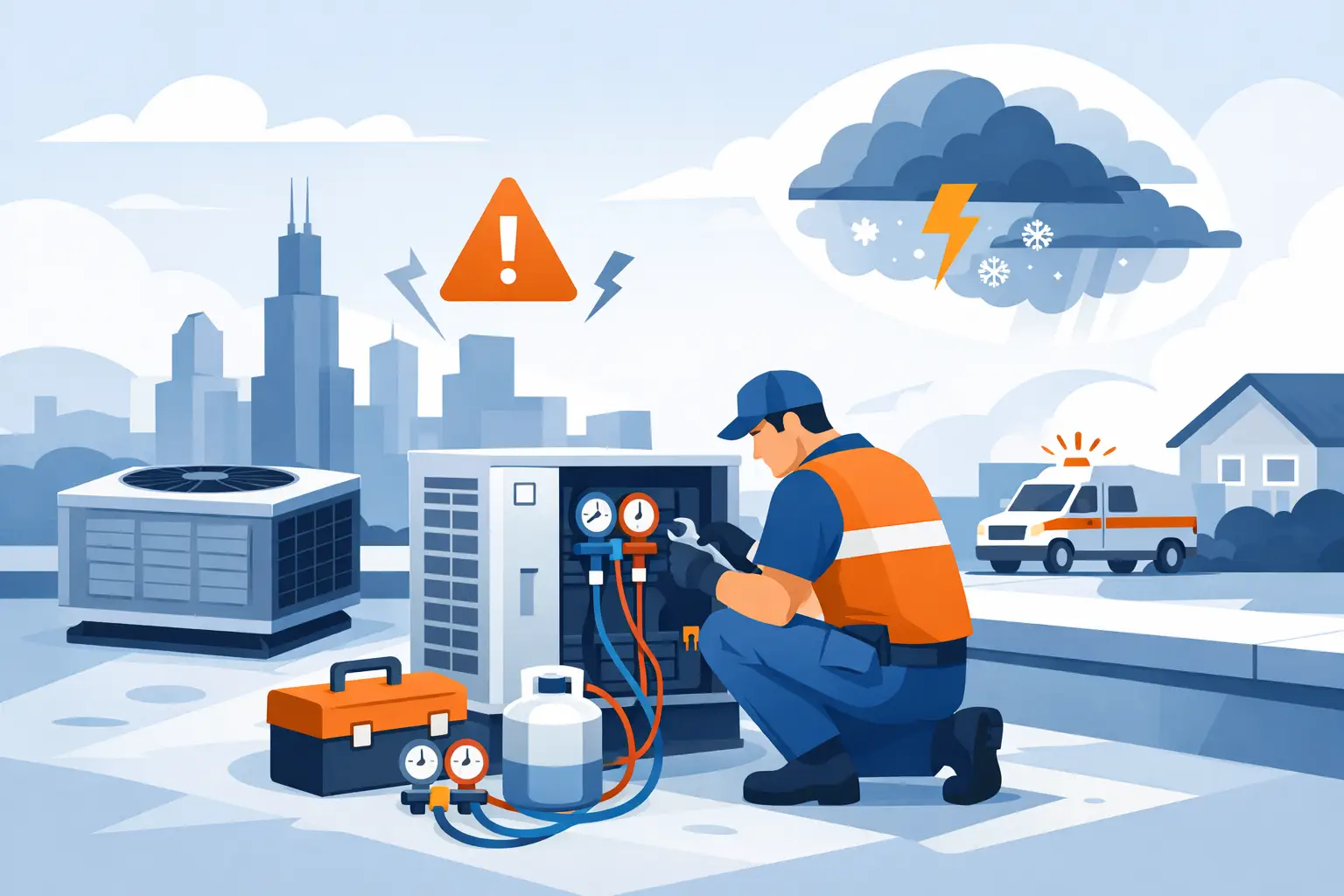
Emergency HVAC Repair Chicago: What to Do Now
A furnace that quits during a Chicago cold snap or an air conditioner that stops on a humid overnight can turn from inconvenient to urgent fast. When you need emergency HVAC repair Chicago service, the priority is not guessing at a fix. It is protecting people, preventing further damage, and getting a qualified technician on the way.
For homeowners, landlords, property managers, and business operators, a fast response can protect comfort, equipment, inventory, and daily operations. Knowing what counts as an HVAC emergency – and what to do while you wait – helps you make a clear decision under pressure.
When an HVAC Problem Is an Emergency
Not every HVAC issue requires a middle-of-the-night service call. A thermostat that needs replacing, uneven temperatures in one room, or a system that has become slightly louder can often be scheduled during regular service hours. But some conditions should not wait, especially during extreme Chicago weather.
Loss of heat is an emergency when indoor temperatures are dropping quickly, vulnerable residents are in the home, or frozen pipes are a risk. This matters in single-family homes, apartment buildings, offices, restaurants, and any property where cold conditions can disrupt safety or business operations.
Loss of cooling can also require immediate attention during high heat and humidity. Older adults, infants, pets, and people with certain health conditions may be especially vulnerable in a hot indoor environment. For commercial properties, failed cooling can affect employees, customers, sensitive equipment, or temperature-controlled products.
Call for urgent professional help if you notice burning odors, smoke, sparking, repeated breaker trips, a carbon monoxide alarm, a gas smell, or water leaking around your furnace, boiler, or air conditioner. These are not situations to troubleshoot by trial and error.
What to Do Before Emergency HVAC Repair Arrives
A few safe steps can reduce risk and give the technician useful information. First, check the thermostat. Make sure it is set to heat or cool as needed, the temperature setting is correct, and the batteries are working if it uses them. Then check whether the HVAC breaker has tripped. You may reset a breaker once if there is no smoke, burning smell, or visible damage. If it trips again, leave it off.
If you smell gas, do not operate switches, appliances, or your thermostat. Leave the property, move to a safe area, and contact the gas utility or emergency services as appropriate. If a carbon monoxide alarm sounds, get everyone outside immediately and seek emergency assistance. Do not reenter simply because the alarm stops.
For water around an air handler, furnace, boiler, or AC unit, turn the system off if it is safe to do so. Water can damage floors, ceilings, electrical components, and nearby belongings. A small amount of condensation may be normal in cooling season, but pooling water, active dripping, or a ceiling stain needs attention.
You can also replace a visibly clogged air filter if you have the correct size available and can do it safely. A blocked filter restricts airflow and can cause overheating, poor cooling, or a frozen evaporator coil. However, do not remove panels, handle wiring, bypass safety switches, or repeatedly restart a system that is shutting down. Those actions can turn a repair into a larger equipment failure.
Common Causes of Emergency Heating and Cooling Failures
HVAC systems usually give warning signs before a complete shutdown, but breakdowns can still happen without much notice. In winter, furnace failures may involve an igniter, flame sensor, blower motor, pressure switch, control board, or airflow restriction. Boiler issues can involve circulation problems, pressure concerns, leaks, or failed controls.
During cooling season, emergency calls often involve frozen coils, clogged condensate drains, failed capacitors, electrical issues, refrigerant-related problems, or a malfunctioning outdoor condenser. A system that runs continuously without cooling the space may have more than one possible cause. The right repair depends on testing, not assumptions.
Commercial HVAC emergencies have additional complications. A rooftop unit may serve a large area, a restaurant may depend on cooling to protect customer comfort, or a multi-unit building may have several systems with different operating conditions. Fast diagnosis matters, but so does identifying the actual source of the failure so the repair holds up after the technician leaves.
Why Quick Repair Protects More Than Comfort
Waiting too long can make a manageable repair more expensive. A furnace struggling with poor airflow may overheat and damage additional components. A leaking condensate line can create water damage and indoor moisture problems. A boiler leak can affect pressure, efficiency, and surrounding property.
There is also an energy-cost side to urgent HVAC issues. Equipment that runs nonstop, short cycles, or fails to maintain set temperatures uses more energy while delivering less comfort. A professional repair can restore proper operation and help prevent the higher utility bills that often follow a system problem.
For landlords and property managers, quick action helps protect tenants and the property itself. For business owners, it helps avoid lost productivity, unhappy customers, and disruptions that can extend beyond one uncomfortable day. Reliable heating and cooling is part of keeping a property functional.
What a Professional Emergency HVAC Visit Should Include
A quality emergency call is more than getting the system to turn back on. A certified technician should inspect the equipment, identify the reason for the failure, explain the issue in clear language, and recommend a repair based on the condition of the system.
Some repairs are straightforward, such as replacing a failed capacitor, clearing a drain blockage, repairing a connection, or replacing a worn ignition component. Other situations require a closer conversation. If an older furnace has a major heat exchanger issue or an aging AC system has a significant refrigerant leak, repair may not be the best long-term value.
That does not mean replacement is automatically the answer. It depends on the equipment age, repair cost, maintenance history, efficiency, available parts, and the needs of the property. A dependable contractor should explain the trade-off so you can make an informed decision without pressure.
4J’s Heating and Cooling provides around-the-clock support for urgent heating and cooling problems, with trained technicians focused on restoring safe, dependable comfort. Whether the issue affects a home, apartment, retail space, or office, clear communication and prompt service help reduce the stress of an unexpected breakdown.
Preventing the Next HVAC Emergency
Emergency repairs cannot always be avoided. Parts fail, weather is demanding, and older equipment can develop problems quickly. Still, regular maintenance lowers the chance of a surprise shutdown and gives technicians an opportunity to find worn components before they fail completely.
Change filters on schedule, keep outdoor AC units free of leaves and debris, and do not block supply or return vents with furniture or storage. Before heating season, have the furnace or boiler inspected. Before summer, schedule an AC tune-up. These visits can improve efficiency, support system lifespan, and catch safety concerns early.
Pay attention to changes between maintenance appointments. New banging or squealing sounds, burning odors, weak airflow, uneven temperatures, rising energy bills, frequent cycling, and repeated thermostat adjustments are all reasons to schedule service before the system reaches a full failure.
Emergency HVAC Repair in Chicago Starts With a Safe Call
When heating or cooling fails, you do not need to diagnose every component yourself. Share the symptoms, the equipment type, any unusual sounds or odors, and whether the system is completely off or partially operating. That information helps the service team prepare for the call.
If there is a safety concern, leave the equipment off and keep people away from the area. If the problem is a comfort emergency, take simple steps to protect the space while professional help is on the way. Fast, careful action now can make the repair simpler and help your property return to dependable comfort sooner.